What to Carry to a Block Printing Workshop
Bring the right fabric, leave room for the print and choose a bag around the studio’s take-home instructions.
Ask how your fresh print will come home before you choose a bag for the workshop. The fabric you bring can usually be packed as the instructor requests. The print you leave with may need a different carry. Ask the studio how it hands back fresh work, then choose a tote or backpack for the pieces that can go inside. If the instructor asks you to carry a print flat in a separate tray or leave it to dry, give that instruction priority over fitting everything into one bag.
Start with the studio’s description of the class. It matters whether you are printing on one supplied tea towel, bringing a fabric piece from home, or making an edition of paper prints. This guide focuses on fabric block printing and the bags that carry the personal kit and studio-approved take-home package.
Find out what the workshop sends home
Honeyberry Studios’ workshop FAQ describes a class that provides test fabric and tea towels and permits certain optional fabric pieces. Youth Rising Above’s workshop describes taking home both the printed fabric and the blocks. Those are different return loads. Before packing for your own class, ask three questions: What will we print on, will we collect it the same day, and does the studio provide the carrier or wrapping?
Ask about the size as well as the material. A studio may use a small square, a long tea towel or a larger item you bring yourself. A loose fabric blank can fold compactly while the package you are allowed to take home can be wider or more rigid. If the answer is that your work stays at the studio, plan a second trip and confirm how it will be handed to you. That may spare you the trouble of carrying a large bag to class.
Clarify whether a printed block comes home in the same session and how the instructor wants it packed. Keep a block in the container the studio recommends and apart from the finished fabric. If you’re bringing a tool or material of your own, bring it only when the instructor approves it and follow their storage instructions. Many beginners can leave home with the personal items they would carry to any short class.
Give blank fabric an easy first reach
If the workshop accepts fabric from home, check its guidelines before choosing a piece. The fabric examples in a specific workshop’s FAQ describe that workshop. Follow your instructor’s guidance on fabric type, preparation and what sizes they can accommodate. Once you have the right piece, fold it the way you want to hand it to the teacher. A separate clean pouch or wrapping keeps it away from your lunch container and anything you might use on the trip there.
Try the pickup with the bag next to a chair. Can you get the fabric out without moving your phone, wallet or the layer you wore on the way? At a shared worktable, the most useful arrangement may be one that lets you lift a clean bundle out and set the rest of the bag where the studio asks. Put a notebook or any approved papers beside the fabric so you can get those out without spreading the entire bag open.
If your class provides everything, pack for the commute and leave a space for what they say will go home. Before adding a second blank, ask whether there is time for it and whether you’ll have to carry two finished pieces. One approved print package is easy to plan around. Two packages may have to stay separate. The number you can make in a class and the number you can comfortably carry home are different questions.
Use a stand-in for the return package
Try a folder, carton or other clean household stand-in of the same approximate size as the package the studio described. A rigid stand-in shows whether the opening is wide enough and whether the package would bend around a bottle or a bulky layer. Close the bag as you would on the way home. If you have to tilt the stand-in, decide whether the studio’s instructions allow that position before assuming the bag will work.
For example, suppose you print a tea towel on a Saturday. The studio says you can take it home in its own flat container if it’s ready. The container goes in the carry test, with the phone and keys still accessible. If you’ll be on a bus, see where the packed bag would sit when you take a seat. If the container needs to stay level and the bag puts it on its edge, carry the container separately and use the bag for the personal items.
Think about the busiest doorway on the route home. Think about whether you need to hold an umbrella, open a door or get a transit pass. The safest choice for the artwork may be to use a studio carrier and pack a smaller bag for everything else. Test your route with an empty stand-in so you can discover the awkward part before you’re carrying the real piece.
Pack for two possible outcomes on the same day
Leave home with the blank and an empty place for your notes. At the studio, ask when they decide whether you can take the print. If that decision comes near the end, keep your trip home flexible. For a piece that stays, put the collection information with the supplies you bring home and take the usual bag. For a piece that leaves with you, get the approved carrier before putting away your other things. Set out your keys or transit card so you don’t have to stop and open the bag while holding the finished piece.
If you’re meeting a friend after class, consider how you’ll keep hold of the package during the extra stop. You can ask the instructor how to carry it and whether there’s a place to set it down while you gather your coat. Work out whether you can sit with the approved package in the position it needs. If you can’t, collect it later when the studio offers that option, or take a route that makes the carry manageable. The finish and timing are matters for the studio. The job of your bag is to leave enough room for the right carrier and keep your hands available when you need them.
Compare two Vaschy bags for the approved load
A structured canvas tote for the walk to a shared table
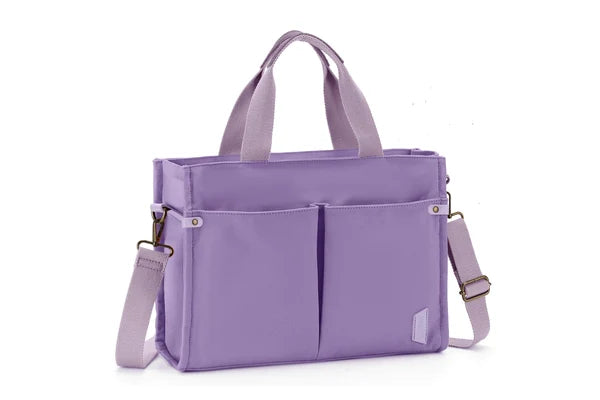
Vaschy describes its Canvas Tote Bag for Women as a structured tote with a detachable shoulder strap. Try it when you want to set the bag beside a chair and lift a folded blank or pouch out from above. Test the actual return package separately. A structured silhouette can make it easier to see where the package sits, but the package still has to clear the mouth and stay in the position the studio approves. Shop the Purple Canvas Tote if the workshop materials and your normal personal kit fit without pressing into each other.

If you’ll use the strap, test where the tote sits when you walk and turn. A wide package that fits at the counter may make a shoulder tote stick out in a busy doorway. Try lifting it by its handles as you would when you arrive. You can use the tote for a folded blank and the paper instructions even on a day when the print must go home in a separate carrier.
A backpack when your hands will be needed elsewhere
The L version of the Vaschy Lightweight Classic Backpack is listed at 19 L and has two large compartments. Compare it if you’ll commute with other items and want a place for a clean blank apart from the rest of the class kit. Put your personal items in first, then try the blank in its wrapping. Check the space left for any permitted return package. Shop the Lavender Plaid Lightweight Classic Backpack if the ordinary load fits and the two compartments help you keep class materials in order.

Remember how a backpack sits on the body. A package inside it may be upright even if you packed the bag while it lay flat. Check the position when you lift the bag from the chair. If the instructor says the printed surface needs to stay level or untouched, keep that package out of a backpack that would turn or compress it. The backpack can still do the useful job of holding the coat, notebook and other supplies so your hands are available for the separate print carrier.
Before leaving, ask one question about the print
Ask what to do with this specific piece once you get home. The studio may want the piece to rest or may give instructions for finishing later. Write that down in the format you’ll find again. If you have multiple pieces, ask which instructions belong to each. A note in the right spot saves you from trying to identify a wrapped piece at home by opening everything.

Before packing up, account for the fabric you printed, any block the instructor says belongs to you, and the instructions. If something is staying to dry, record the collection plan while you are still at the studio. Remove the other supplies when you get home so the tote or backpack is ready for ordinary use. Treat the next workshop as a fresh packing decision if the ink, print size or venue changes.
If you prefer to reach into a structured bag from beside a table, shop the Purple Canvas Tote after checking the folded and packaged loads. If you’ll need both hands for the commute or the separate print carrier, shop the Lavender Plaid Lightweight Classic Backpack after testing its two compartments. Let the instructor’s take-home instructions decide where the fresh print travels.


