What to Bring to a College Career Fair: Pack for the Booths
Pack a usable career-fair folder, keep paper and online resume steps distinct, and plan where your class-day backpack will go before meeting employers.
For an in-person college career fair, bring a slim folder or padfolio with any requested resume copies, a pen, a short employer list and a way to record next steps. Add the ID or registration details your event requires. If you are arriving with a class-day backpack, decide where it will go before you enter the fair.
The materials need to be ready when a conversation starts. You do not want to search beneath a laptop for a resume, mix up two versions or leave an application instruction on a loose card at the bottom of your bag.
This carry plan is for students attending college and university career fairs in the United States or Canada. It covers materials and organization. For help with your resume, introduction or interview preparation, use your school's career center.
Confirm what travels into this particular fair
Read the event page and any attendee message before packing. Look for check-in requirements, bag or coat arrangements, paper-resume guidance and anything you need for a scheduled appointment. An event being on campus does not establish that your ordinary class load belongs on the fair floor.
The Texas State career-fair guide, for example, recommends keeping backpacks out of its fairs and describes a staffed backpack drop-off room. RIT's student guide advises leaving bags at home for quicker check-in and says its SLC lockers are for gym use. Those arrangements are specific to their events, not promises about storage at yours.
If you are coming straight from class, ask the organizer where a backpack can go, when any storage opens and when you must collect it. Also ask about a coat if you will have one. Do not plan around a nearby locker or a room that has not been confirmed for attendee use.
For a fair-only trip, you may be able to bring the small set of materials directly. For a full campus day, work out how the materials will come out of the larger bag before it is put away.
Make the resume folder easy to use
Start with the actual resume copies you expect to need. Check the event's advice and the employers you plan to meet, rather than treating one copy count as a rule for every fair. Leave time to print and check the final version before the event.
A folder or padfolio can keep papers together while you move between booths. Check that the complete pages sit flat inside it and that the cover closes without folding their corners. If the folder will travel in your backpack, test the folder's outer cover and any tabs through the bag opening.
Give outgoing resumes a separate place from employer notes and incoming leaflets. With a two-pocket folder, you could use one side for outgoing resumes and the other for collected material. If you use another format, choose a separation you can recognize without reading every sheet.
If you have prepared different versions for different roles, make the sets easy to distinguish before you take a copy out. A removable divider or a labeled sleeve can identify each set without marking the copies you will hand out. This is an organization suggestion, not a reason to change a reviewed resume at the last moment.
Try taking out one copy while holding the closed folder or padfolio. Watch for loose pages sliding out, a cover that catches the paper or a pen that has no consistent place. Change the arrangement before loading it into the bag.

Keep paper copies and online applications distinct
Do you need printed resumes at a college career fair? Check the event and employer guidance. Some representatives may accept paper, while others will direct you to an online process. Having a paper copy does not mean the employer has accepted an application.
The University of Toronto Mississauga's career-fair tips recommend checking which employers will collect resumes and having updated copies available if asked.
If an employer directs you to a website or QR code, record the organization, the role or program and the requested next step. A saved link and a submitted application are different stages. Beside the employer's name, note whether you saved the link, started the form or submitted the application.
If you expect to use a phone for event details or employer links, check that it is ready for the day and follow the event's device rules. You can record the instructions on paper when that is more practical, then use the employer's official application route afterward.
A laptop is worth carrying to the fair only if you have a planned use for it, such as an activity named by the organizer. If it is coming for a later class, include it in the commute and storage plan. That does not make it part of the booth materials.
Give each employer a small record
Bring a short list of the organizations you hope to visit, with a little space for notes. Keep the list usable while standing; a few relevant prompts are easier to consult than a thick research printout.
You could give each organization a small section with four fields:
- The employer and role or program discussed.
- The question you wanted to ask and the answer to check later.
- The contact information or official follow-up route you received.
- The next action requested, including any date the representative specified.
Use these as note headings rather than a script for the conversation. Keep your own priorities and the employer's actual instructions at the center.
UTM's guide, linked above, recommends finding a quiet place to make notes after a conversation. Use that pause to connect a business card or leaflet with the correct employer entry. If you leave everything loose until you get home, it may be harder to remember which instruction belonged to which organization.
Give the pen one consistent place. If you take notes on your phone, decide how you will title the entries so that company names and next steps remain searchable later.
Choose the campus bag around the rest of your day
If you need a backpack for the journey or other classes, compare its layout with the complete day you have planned. Try taking the fair folder out while your books, charger and lunch stay packed. Check that the bag closes normally with the actual folder inside.
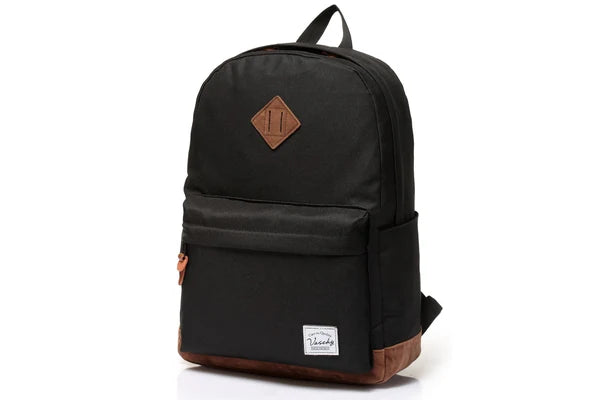
The VASCHY ClassicPack in Black, SKU 01HS, is one everyday campus option to compare. Its current listing describes a double-zip main compartment, an exterior zipped pocket, bottle pockets on both sides and adjustable padded straps.
You could try the folder in the main compartment and the small items needed during the journey in the exterior pocket. Use your actual folder and contents for that check. Neither the pocket arrangement nor a product photo proves that a particular padfolio fits or that a fair permits the bag inside.
Shop the VASCHY ClassicPack in Black and review its current product photos.

For a broader campus carry decision, the college backpack or messenger bag guide covers travel and ordinary access. Keep the fair's carry instructions beside that comparison. If the bag you already own works for both your route and confirmed storage arrangements, use it.
Do not add a larger bag just to collect more promotional material. Choose what you want to keep and make sure your useful papers still have a clear place when you repack.
Rehearse the handover before leaving
Pack the normal class-day items first if they must travel. Then remove the fair folder, pen, required check-in details and any personal essentials that you will need while the backpack is stored. Hold the complete set you plan to take into the fair.
The University of Texas at Austin College of Natural Sciences guide emphasizes carrying a small amount so you can move around the fair and keep your hands available. Use that as a prompt to try holding the materials you intend to carry between booths.
Stand with the folder closed, take out a resume, put it back and make a brief note. Notice whether you need a table each time you switch between the resume and your notes. If so, simplify the set or choose a folder arrangement that is easier to handle.
Keep any collection token and the organizer's retrieval instructions with the items you take into the fair. Allow for any collection deadline before your next class or journey home. Do not assume that storage remains available after the event.
Check food, drinks and coat arrangements separately if they matter to your day. A bottle pocket on the commute bag does not determine whether a drink may go into the event.
Bring the useful information home
Before repacking, put the remaining resumes in their section and collected cards or papers with the relevant notes. Keep any requested application steps visible rather than filing them beneath old class handouts.
At home, review the record against the event and employer instructions. Separate actions you have completed from those still to do. Use your career center if a next step or request is unclear; carrying a well-organized kit does not guarantee an interview or offer.
Keep this final check with your list of what to bring to a college career fair: correct event details, current resume versions where useful, questions, a working note-taking method and a confirmed plan for anything you will not carry on the floor.

When you need a bag for the wider campus day, shop the VASCHY ClassicPack in Green or browse VASCHY backpacks to compare everyday layouts. Check the bag with your own class load and removable fair materials, then follow the event's directions for what goes inside.


