How to Choose a Bag for Comic Book Shopping
Test a covered stack of issues before choosing a tote or messenger. Plan for the backing board, a larger issue, and the extras you might pick up.
Measure the biggest comic with its sleeve and backing board before you choose a shopping bag. The holder needs to clear the mouth and come back out without bending. Try a structured tote when you like lifting purchases straight up at the counter, or a messenger when the stack works better on its side and you want both hands for browsing.
Learn which purchase defines the carry size
A comic shop visit may involve picking up a pull list, browsing inexpensive issues or looking for a collected edition. Ask the seller what format to expect if it affects the trip. BCW’s comic bags and boards guide distinguishes between several comic formats and the sizes it sells for them. Its article on trade paperbacks addresses a separate fit problem for collected books. Use these distinctions to decide which dimensions to check. Confirm the actual item and holder rather than relying on a period label.
Measure a comic the way you will carry it, inside whichever wrapper and backing you intend to use. Include the closure lip, any cardboard corners and an exposed edge you need to hold. If you’re bringing an extra holder as a precaution, allow for it before you take measurements of the shopping bag. A holder can change the outer footprint even when the comic itself seems fairly thin.
For an order you haven’t seen yet, take a reusable folder or divider that provides more room than you expect to need. Ask the shop to show you the covered dimensions if you are considering a different format. Use paper to represent the thinnest issue and an ordinary book to stand in for a thicker purchase during an at-home packing test. Keep uncertain collectibles away from hard objects in the shopping bag until you’ve seen how they fit.
Trace the largest outline and a thicker version
Draw the outer edge of the largest holder on cardboard. Add a second version with thickness for the combination of items you are likely to buy. Try the thinner piece first to learn the path through the opening. Then use the thicker one with your keys, phone, glasses case and other essentials in place. This lets you see whether opening space vanishes as soon as a bag is otherwise filled.
Build a supported stack that comes out with one grip
Start with a clean, flat area in the bag. Give your purchase support suited to the item. If several pieces are all going home at once, try separating thinner covered issues from a thicker hardcover or trade paperback. A small rigid book can shift against an issue when the bag tilts. Keep keys, adapters and other loose hardware where they cannot fall against the corner of a comic holder.
Stand the bag upright, remove the largest mock purchase and then put it back in. If the corners drag, straighten the opening or change the orientation. Don’t try to win the test by bending the board. Try the same extraction with the bag hanging from its usual strap. Some bags become narrower at the top when worn, even if a flat case goes in easily when you hold it open at home.
Now try it with the bag empty except for the purchases. If a stiff folder flips flat and gives the rest of the stack space to slide, decide which slot keeps it upright when you’re halfway through an errand. A place that works when the bag is full can change after you set something down at the register. Notice where the corners are when you lower the bag onto a chair or rest it against your leg.
Plan for the browse and the purchase in different positions
Imagine you’ve stopped at a long row of bins. Keep the bag close enough to browse without having to steady it with the hand you use for dividers. If you have a shopping list, give it a spot you can reach without opening the comic holder. Check the store’s bag policy first if this is a convention, sale or cramped venue. A bag that makes sense for a short shop visit can be too large for an event with different rules.
Build a quick checkout routine. Take out your payment without disturbing the empty holder, then set the holder down and take just the parcels that belong in it. If a large book arrives in different packaging than expected, consider a separate carry. Do not try to push a tight hardcover into the folder just to combine everything. Check whether you can adjust the strap, keep the bag upright and hold the larger piece separately until you reach an appropriate place to pack it.
Think about the last block of the trip. A comic stack that stays flat at the counter may end up sideways when you squeeze onto public transit or reach your car. Test how you put the bag down on a chair and pick it back up. Don’t rest heavy shopping on top of it. If a stack can’t sit still without the bag lying down, consider a differently sized holder or a bag with a base where the stack can settle as you actually carry it.
Give an unexpected purchase its own trial
Suppose you go in expecting two thin issues and also buy a thicker collection. Make a paper-and-cardboard version of the issues’ outer holder and use a household book to simulate the collected volume. Stand both items in the bag. Look at the gap between them after you set the bag down, because that is where a heavy book can shift against the edge of a thinner issue. If you add one separator, note whether it narrows the opening for the widest purchase.
Try the same setup after you take the heavier book out. Check whether the protected issues slide lower when the rest of the space empties. With a tote, a clean folder you can grip from above may keep the two shapes easy to separate. With a messenger, look for a way to support the long edge so the stack does not rotate as soon as you lift the strap. Choose by what you can take out with the other piece still in place.
Repeat the test once with only the smaller stack, like a trip to collect your normal order. If it disappears below your daily items, give the paper kit a dedicated position. If a book always takes up most of the room, ask the shop how it packages it. You may decide to carry that purchase separately and still prefer the slimmer bag for the rest of the visit. Neither choice depends on knowing the final number of comics before you go.
Compare a structured tote and a canvas messenger
Tote for lifting a flat stack from directly above
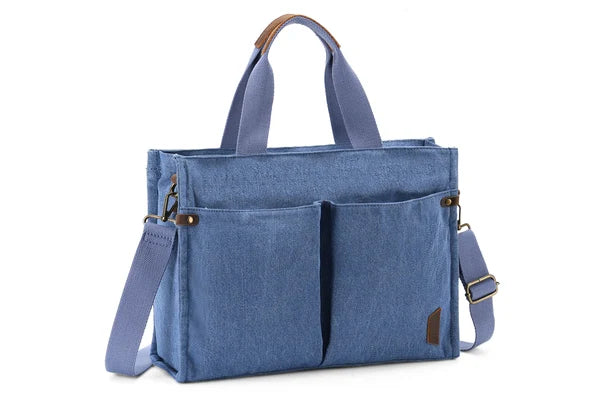
Vaschy lists the Canvas Tote Bag for Women at 16.2 liters and describes a structured build with a detachable shoulder strap. It’s a candidate when you expect to set the bag upright by a counter and lift the stack by the upper edge of its holder. Test with the tallest piece first. See how far the handles move out of the way while you remove it. If you plan to wear the strap, check that the tote holds the stack at the same useful angle when you lift it.
Shop the Vaschy Canvas Tote Bag in Denim Blue if your boarded purchases can travel upright and you want to see the holder at the opening. Do not buy on the liter count alone. A paperback or backing board can be wide enough to require a different turn through the mouth even when the rest of the bag has unused space.

Messenger for a lower horizontal carry and separate front storage
The Vaschy Large Canvas Messenger Bag is listed at 18 liters with a large front flap pocket that uses two buckles. Consider the format when you prefer a horizontal document position and want to keep smaller personal items out of the main stack. Test it with the largest covered issues and the actual layers you intend to wear. Set the bag down, open it and see whether you can pull the holder straight out without making it bow around a corner.
Shop the Vaschy Large Canvas Messenger Bag in Beige if the stack sits better horizontally and the crossbody carry suits your route. Check how the covered items stay in place when you move around. A small pile can shift in a roomy bag, so make sure the inner holder sits somewhere steady in both the empty and fully packed trials.


Decide by the largest protected purchase
Can the same bag carry issues and collected books?
Often the answer depends on the mixed stack’s footprint and thickness. Keep a heavy or stiff book out of direct contact with thinner issues. Compare the size of both pieces together in the position they’ll travel. If adding a second kind of item forces the holder to flex, revisit the load or carry the larger piece separately.
What if the bag is great for browsing but awkward for the trip home?
Plan for the purchases you know about and leave room for one realistic extra. A separate store-provided option might be the most practical answer for a larger unexpected purchase. Test the bag again carrying your normal supplies so that the return does not depend on moving all other objects elsewhere.
Shop the Vaschy Canvas Tote Bag if your flat holder is most accessible from above, or shop the Vaschy Large Canvas Messenger Bag if a horizontal stack and separate front pocket work better on your route. Take the template and test the biggest covered piece before you order.


