How to Choose a Tote Organizer for Switching Between Bags
Use the smaller tote’s opening and the softer tote’s loaded shape to choose an organizer that lifts out without losing space for the rest of your gear.
Pack the items you move between totes, then test the loaded organizer in both bags. It needs to clear each opening, rest on both bases and lift out without catching the items around it. Try a pouch for a few small essentials. Compare an organizer when you want several pieces to stay upright and separate.
Identify the items that really change bags
Put both totes on a table. Empty them and make three piles: objects that must go with you every time, objects you use in only the first tote, and objects that make sense only in the second. If a notebook, charger or glasses case stays with one bag all week, give it a permanent position. Place the smallest group that actually moves together in front. Try doing the job with that group alone.
Count how often you use each item. Keys and a card case might be used several times. A first-aid item or other allowed backup can sit in a more closed pocket. The most important choice is which ones you need before you set the tote down. If those items sit in an exterior pocket today, test whether moving them inside the insert adds a step you’ll dislike.
Try one carry without an insert. Use a pouch you already have or a small empty box for rehearsal. Put the shared core inside, then add the other items that live in that bag. Check whether you simply need one faster way to lift the common group, or a way to keep different objects from piling up. The second problem can justify walls and smaller pockets. The first may need little more than a lightweight pouch.
Take three useful measurements for each tote
Original Club’s organizer FAQ explains that the base length and width, plus height, matter when sizing one of its custom inserts. Apply that principle independently to each bag. Measure the clear space where the insert will sit. Note seams, raised corners and other features that could use part of that room. Write down the measurements in the same units. Neither bag’s outside measurements can explain all the space available inside.
Measure the narrowest reasonable path through the opening as well. A soft bag can follow the shape of its handles when you lift it or hang it over your arm. A zip opening may get narrower at one end. Measure the opening in the position you usually use when swapping bags. Use your usual strap arrangement, and check the top margin above the objects you expect to carry inside the insert.
Look at where you would grip the insert. Measure how much space is left above the tallest item and around its edges. A tray might rest on the bottom once inside and still give your fingers nowhere to go. Make a cardboard template for each base and use the portion of the two shapes that works in both. If the two bags fail at different points, such as width in one and height in the other, account for both limits.
Give the transfer somewhere to happen
Put both bags where you normally change them. A bench by the door, desk corner or bedroom chair will suggest a different way to lift the shared kit. If you switch at a small surface, leave a place for the insert to stand while the second bag opens. An insert that works only when you hold both straps apart may not help with a quick change before leaving.
Rehearse a full, loaded transfer
Use the candidate insert or a mock version that matches its width, depth and height, including its handles. Pack the shared group. Give both bags the things that normally stay with them before you test. Insert the loaded organizer in the first bag, close the bag and open it again. Lift it by the grip you intend to use. Then put the organizer into the second tote and close that bag too.
Check whether the insert tilts as it crosses the second opening. If one item always projects above the others, move it to a different spot and try again. Notice whether trying to get the insert out exposes the rest of your gear or pulls a notebook along with it. An organizer is supposed to make the shared group independent. If you have to empty the bag to get it out, change its shape, reduce what moves or compare a different tote.
Walk with each tote in its normal carry position. Stop, set it on a chair and check whether the insert rests level enough to use and accessible enough to remove. Then perform the last transfer back into the first bag. This is where extra height and weight often become most obvious. If pulling the insert out is awkward only when it is full, choose for its loaded shape.
Compare the swap with a small pouch and a tray
Start with two plausible kits. Your first version might contain a slim wallet, keys, a cable and a few small personal items. Put them in a light pouch and record which pieces need their own organization. The second version could add a glasses case or a small pen holder that you need to see at a glance. Use a slim tray as a mock organizer. Before you close the tote, check the height of the tallest thing and where your fingers go to lift it.
Transfer each kit into the second tote without changing the items that live there. If the tray’s corner catches the zipper seam, see whether removing the tallest object helps. If the corner still catches when empty, the geometry is the problem. Compare the pouch in the same spot. You may give up some individual slots and gain an easier lift, which is a useful trade for a quick morning swap.
If both organizers fit, weigh them with the same contents using a household scale and then compare how the bag feels in your ordinary carry position. The number is for your setup only. Pay attention to whether the bulk makes the rest of your gear harder to reach or flattens a pocket you currently rely on. Leave room for the Monday laptop or the weekend bottle and do another transfer. An insert that works only on the lighter day can still be useful if you keep a separate plan for the other bag.
Finish by unpacking one item that never moved between totes. If the organizer takes over its space, shrink the shared kit. The buy decision becomes easier when both bags are still good at their separate jobs.
If one bag usually hangs on a hook during the swap, repeat the lift from there as well. A tote’s soft sides can pull together when it hangs.
Compare two Vaschy totes as homes for the same kit
A structured canvas tote for a repeatable drop-in
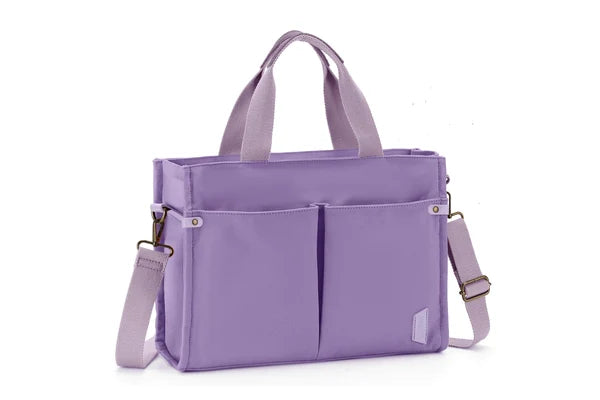
Vaschy lists the Canvas Tote Bag for Women at 16.2 liters. The brand describes a structured tote and a detachable shoulder strap. Try the organizer along the base with your dedicated items still in their places. The structure can help give a firm insert an obvious orientation. Check that you can reach all the existing storage you want after sliding the insert into the main area.
Shop the Vaschy Canvas Tote Bag in Purple if you want a defined space for the core and your insert can clear the opening while loaded. Measure the actual bag and your insert together when possible. The listed volume does not say whether the top closes easily after you add the contents, or how the tote will feel once you’ve attached the strap and lifted it.

A quilted tote if you want give around a smaller shared kit
The Vaschy Quilted Puffy Laptop Tote is listed at 18 liters and has a visible quilted shape. Compare it if you expect to use the tote for varied items and want some give around your small organizer. Try the actual tote when you will carry it by the handles or over a shoulder. Observe whether the opening pulls in and whether the platform under the insert shifts when you set the tote down.
Shop the Vaschy Quilted Puffy Laptop Tote in Green Space if you prefer the quilted format and your small organizer lifts out easily. A longer or thicker insert may change how the fabric settles. If its corners push against the sides or the closure does not work once you add a notebook, compare a smaller insert or separate pouch before settling on a bag.


Know when a pouch is the better buy
What if the larger tote has unused room after the swap?
Leave space for the items specific to that tote. If your shared kit already fits, an insert sized to fill the larger bag may not work in the smaller one. If it tips, rearrange the tote’s own contents or try a stable place on the base before buying for more volume.
Should I copy a product’s listed bag dimensions?
Use those dimensions to start a shortlist. Test the opening, usable base and lift clearance with your own load. An organizer designed for a particular outside profile or another model cannot establish fit in these two totes. Continue until it closes and lifts out without pressure.
Choose the tote and the smallest transfer kit that works
Repeat the transfer with both bags after you’ve packed for the actual day. Shop the Vaschy Canvas Tote Bag if you want a structured place for a shared organizer, or shop the Vaschy Quilted Puffy Laptop Tote if a small insert or pouch suits how you change your load. Make the insert earn its room by making the swap easier.


