Suede Is Leather: Reading Backpack Bottoms and Trim
Suede is a leather surface description. Map the backpack body, bottom and trim separately, then check the care information for the actual model.
Suede is leather with a napped surface. When a backpack listing says “suede bottom,” read that as a description of one component. It does not mean the whole backpack is made from leather, and it does not give you a complete care routine or a performance rating.
For a useful shopping comparison, identify the body, base and trim materials. Then decide whether the documented construction and care suit your routine.
If you like a brown base, keep that style preference in the decision. Read the material wording too, especially when similar-looking panels have different descriptions.
Read suede as a leather description
The Leather Working Group’s terminology document defines suede or velours as leather or split leather finished to produce a velvet-like nap. The term concerns the leather surface. It is not the opposite of the wider category called leather.
Leather Naturally’s terminology guide also explains split leather and suede. These are useful industry definitions when a product page gives only a short material phrase. They help you understand the words; they do not certify the material used in an individual bag.
Keep the maker’s full wording with the product name. “Suede bottom,” “leather zipper pulls” and “leather-look trim” are different statements. A photo alone cannot fill in a missing material description.
If the description uses an appearance term such as suede-look, ask what the material actually is. A similar soft or matte surface does not settle whether the panel is leather, another material or a particular finish.
Draw a small material map of the bag
Divide the bag into a few ordinary parts: main body, bottom panel, handles or straps, zipper pulls and lining. Beside each part, write the material information supplied for that exact model. Leave an unknown as an unknown.
A textile backpack with leather details can have more than one material to consider. The body fabric’s instructions may not describe the base, and a statement about the pulls may not apply to the shoulder straps.
Manufacturer pages show why this component-level reading matters. JanSport’s leather-bottom collection describes suede leather bases and details within particular backpack designs. That is a useful example of scope, rather than evidence that a whole bag or another brand’s base has the same construction.
Four short lines beside the product page can identify the described parts and the questions that remain. Keep the exact product link with those notes.

Keep suede, nubuck and coated surfaces distinct
Soft-looking leather terms can describe different surfaces. Leather Naturally distinguishes nubuck, which is buffed on the grain side, from suede. A brief product photo may make those finishes look similar, especially under different lighting.
Read the term actually supplied by the maker. Avoid upgrading “leather” to full-grain, nubuck or another specific category because the texture looks familiar. Those more detailed descriptions need their own support.
A smoother-looking panel also does not reveal every detail about its finish. Coatings, pigmentation and treatment are separate information. If those details would change the care method or your buying choice, ask for them.
For school shopping, keep the task small: identify the component, its stated material and the instructions that cover it.
What the base panel changes in your comparison
The base is one part of the backpack you handle when placing it down and picking it up. Look at the official underside or side view, the panel boundaries and the adjacent body material. That tells you what the maker is identifying as the bottom.
A material name alone does not establish how the completed bag behaves on every surface. It does not supply a water test, an abrasion result or a promise about the bag’s service life. Keep any specific performance claim with its actual evidence.
Compare the role of the panel with your routine. Where are bags permitted in class? Where does the bag sit at home? Will the care the maker requires be practical for you? These questions connect the material choice to places you actually use the bag.
Read the base information beside the official underside or side view. Ask about the requirement that would change your choice.

Read a Vaschy suede-bottom listing
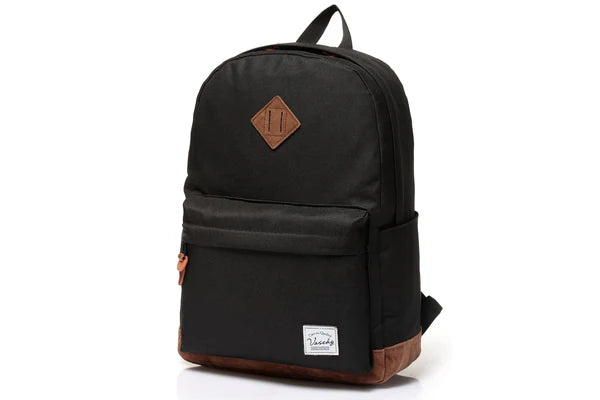
The VASCHY ClassicPack in Black, SKU 01HS, is listed as the ClassicPack Reinforced Suede-Bottom Daypack. The suede-bottom wording identifies the base in the product name; it is not a description of an all-leather backpack.
The current description separately identifies leather zipper pulls, a double-zipper main compartment, an exterior zippered pocket, side bottle pockets and adjustable padded shoulder straps. Keep those component and layout facts separate in your comparison.
That gives you a real material-map example: a named base detail, separately described pulls and a school-bag layout to examine. The listing does not establish a particular leather grade or a complete set of finish-specific care instructions for every component.
If the base or trim care determines your purchase, ask about the selected ClassicPack option through VASCHY’s contact page. Name the component and the care question rather than asking only whether the backpack is durable.
Shop the VASCHY ClassicPack in Black to examine the official images and current description. Then compare the actual school materials and device protection with the bag’s opening and usable space.
Decide whether the care routine suits you
A mixed-material bag needs care that suits the materials actually present. Leather Naturally’s care guide differentiates leather finishes and their treatment requirements. It is a reason to identify the finish first, rather than choose one product called leather cleaner for every panel.
For the complete backpack, start with its own label and maker’s instructions. Ask whether a proposed method is suitable for the base, nearby textile, lining and trim. A treatment recommended for a different bag or a pair of shoes is not automatically the instruction for this backpack.
Our school backpack cleaning guide explains that starting point. This material guide does not add a washing, brushing, conditioning or spray recipe for a product whose full care information has not been supplied.
Think about who will perform the routine and when. A care requirement you are willing to follow can be part of your choice; an unclear requirement is a question to settle before ordering. It is fine to prefer another documented material arrangement if that better matches your habits.
Keep the answers with the exact model. Even within one brand, a backpack with a different base or trim can need a different method. Keep any care reply with the exact model and component.

Questions about backpack leather trim
Does a suede bottom mean the backpack is all leather?
No. The phrase describes the base. Read separate statements for the main body, straps, pulls and lining. A material map keeps the claim attached to the component it names.
Can I judge the leather grade from a photograph?
A photograph can show visible texture and the panel’s location, but it cannot establish every grade, finish or treatment. Use the exact product description and ask for missing information when it affects your decision.
Is a suede bottom automatically waterproof?
No water-protection result follows from the material name alone. Read any stated protection, the components it covers and the intended conditions separately. Do not use the base description as a whole-bag rain claim.
Should I use the same cleaner on the base and body?
Use a method supported for the actual materials and complete product. If the label or maker does not answer the question, ask before applying a treatment. Different components can require different care.
Choose with the component named
Read suede as a leather description, map it to the stated part and keep care and performance questions specific. Then bring the choice back to the school kit, opening and carrying format you need.
Shop the VASCHY ClassicPack in Burgundy or browse VASCHY backpacks to compare current designs. Choose a material arrangement you understand and a routine you can maintain.


