How to Choose a Bag for a Family Aquarium Visit
Plan a bag for the entrance, the exhibit route and the handoff between adults.
Choose your aquarium bag for the entrance, the exhibits and the trip back out. At the door you want tickets and whatever the entrance staff asks to see. Inside, the adults need a way to manage the layers that come off, and a person who takes a child to the restroom needs to know what they’re taking with them. For a short visit with a light load, compare a crossbody. For a longer visit with several layers, compare a backpack after checking the aquarium’s rules.
Start with your normal outing bag and put everything in it before measuring. A soft bag on the kitchen table can look quite different after two sweatshirts go in. Give yourself enough room to close it without flattening a glasses case or burying the phone you need at entry.
Check your specific aquarium before adding supplies
Open the venue’s visitor information for the building and any separately ticketed theater or experience you plan to use. Look for bag dimensions, screening, lockers, stroller parking, outside food and re-entry. They answer different questions. A venue may allow you to bring a bottle into the building while asking you to use it only in certain areas. Check how far you’d have to walk back to a locker to get a sweater.
The Monterey Bay Aquarium visitor FAQ gives families a place to check entry details and practical services before leaving home. The New England Aquarium policies list a size limit for most bags in its main building and theater, with exceptions described by the venue. The Vancouver Aquarium policies direct visitors with their own food to nearby picnic sites. Use the aquarium you booked as the authority for your particular trip, especially if you’re counting on an exception or a place to leave something.
Measure a packed bag at its widest points, including what sticks out of side pockets. Close every zipper the way you will carry it. If the venue measures in another unit, convert its published limit and leave room for rounding, seams and a bottle that shifts. A model’s capacity in liters tells you how much volume the listing assigns it. Admission depends on the actual bag, its contents and the venue’s rules. Ask staff in advance if you need to carry an item under an exception.
Give entry items a place of their own
Pick the pocket you can reach in the queue without setting the bag down. If admission is on a phone, make sure the ticket is available in the format the aquarium accepts. Open it before you leave, check how many individual codes you’ll need, and keep the phone in the same place after scanning. If your party may arrive in two groups, check the ticket instructions before assuming both groups can use a single confirmation. The phone should go back into its pocket before you collect everyone and move on.
Try that with the bag on the body of the person who actually holds the tickets. A right-handed adult and a left-handed adult may prefer different strap positions. If one person is pushing a stroller or taking a child by the hand, let the other person handle entry when that works for your family. A bag can look easy to reach on a coat hook and still land beneath a winter coat when it’s worn.
Keep the parking receipt or anything needed on the way out separate from the admission phone or tickets. A slip of paper can disappear into a large pocket full of hand wipes. If you want to share the bag, point out the two places once at home. That way, an adult can take the bag from the other person and know what to do with it without digging at the next counter.
Pack for the route through the exhibits
Lay out the allowed day kit in the order you’ll use it. Put the entry items first, followed by any approved items you’ll use regularly. Put the extra layer where an adult can lift it out without pulling everything else up by the straps. If the family will bring a bottle, follow the venue’s rules and use a pocket that holds your actual bottle upright. Keep paper tickets and a small notebook away from it. A filled bottle can change both how the bag hangs and how wide it measures.
Plan for the moment one adult leaves the group with a child. If the only bag stays with the stroller, what does that adult need to take? A child’s approved personal item or a phone may belong with the person who needs it, even if the spare layers stay together. Settle this before entering a dark gallery, where a bag handed off by its strap can be hard to reorganize.
If you’re planning to park the stroller, find out where you will be able to retrieve it and which items you want to keep on you. The Monterey Bay Aquarium accessibility guide describes stroller parking and some borrowable resources at that venue. Check your own aquarium’s options before deciding what to pack or leave behind. A family using an accommodation should confirm the details with that venue.
For example, imagine two adults and a child spending a couple of hours indoors, with a meal planned elsewhere. One adult can hold the phone and keys in a crossbody. If the other person is carrying layers, agree on when they trade bags and whether either carrier needs something from the other before separating. On a colder day the same group may take a shared backpack for layers. Recheck the loaded size and let the ticket holder keep the phone where it’s easy to retrieve.
Test the bag at the bottleneck
Pick the narrowest part of your route. It might be the entrance where you show tickets, a row of seats or the space beside the stroller. At home, put two chairs a little apart to represent that space. With the bag closed and the phone in its usual pocket, walk in, sit down and get the phone out. Then stand up and give the bag to the other adult. If the strap catches on the chair or the other person reaches into the wrong pocket, adjust the bag or change the handoff. This test is especially helpful when a family shares one bag among people with different coats and carry habits.
If you plan to buy a bigger bag because a layer didn’t fit, first check how many layers will actually be inside at once. The hardest combination may be halfway through the day when everyone has taken off a sweatshirt. Pack that combination and see if the ticket phone is still reachable. The bag that passes with one person’s kit may stop working when it becomes the bag for everyone.
Compare two Vaschy layouts with the same load
A crescent crossbody for the entry kit
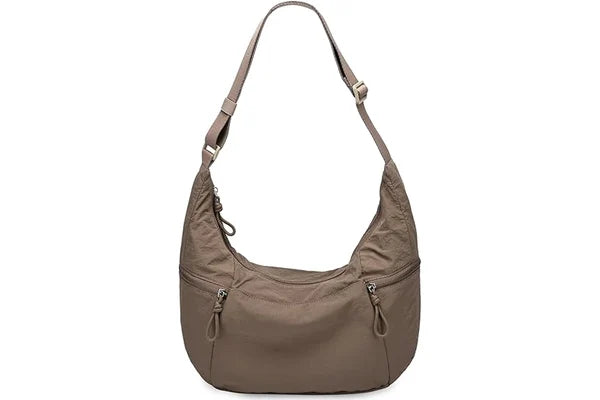
The Vaschy Crossbody Crescent Bag has a soft, curved shape and a listed capacity of 14 L. Try it for the personal kit when you can keep the bag close and leave extra layers elsewhere. Put the phone in its usual case, add the glasses case if you carry one, and test whether the opening closes when both are in place. A stiff rectangular item can occupy a surprising amount of room in a curved bag. Shop the Brown Crossbody Crescent Bag if your loaded kit fits and you can put the ticket phone away without taking the bag off.

Wear the crossbody with the actual outer layer you’ll travel in. Reach for the phone, close the bag and sit down with it where you’d keep it during a talk or a break. If it lands where the child normally sits beside you, shift it around and try again. Check the motion when you stand up. You’re choosing how it moves through the day as much as how it looks at the door.
An UltraLight Backpack for shared layers
The Vaschy UltraLight Backpack listing describes a main compartment with a file divider, a front zip pocket and two bottle pockets. Compare it when one adult will carry the family’s removable layers and the venue permits the filled pack. Try rolling a sweatshirt the way you actually do at a busy bench. Use the divider for a flat item if it clears the opening and still slides out once the sweatshirt goes in. Shop the Midnight Blue & Pink UltraLight Backpack if you want two shoulder straps for the walk and the loaded backpack meets your aquarium’s rules.

On a test walk around your home, take off the backpack to get out one layer, then pack it back up. If the ticket phone went into the same pocket as loose items, pick a better place and try the entry step again. Before leaving for the venue, give the person wearing the pack a clear plan for taking it off in narrow spaces when asked and keeping it close while seated.
Decide where the extra things go on the way home
Leave space for what will actually join the load during the visit. A souvenir postcard can go in a flat spot behind a notebook. A boxed toy or plush is a different decision. Check the opening against the box and keep it as a separate purchase if the bag would bulge or have to stay open. If you borrow something at the aquarium, note where it goes back before you get to the exit. The home trip can involve a stroller, a bus or a walk to the car, so pack the bag you can manage on the whole route.

A good final test takes about as long as looking for a missing ticket. Put on your outer layer, ask someone to hand you the packed bag, scan through the ticket screen, retrieve a sweatshirt and put the phone back. Then measure the bag again with the layer inside and the outer pockets filled. Use the configuration that worked at each step. If there’s a tight limit, remove an optional item or make an approved storage plan before you leave.
If the entry kit is all you need on you, shop the Brown Crossbody Crescent Bag for the lighter carry. If one adult will be in charge of the layers and the aquarium allows the packed size, shop the Midnight Blue & Pink UltraLight Backpack. Keep the normal day bag if it already passes the same test.


