How to Choose a Bag for an Apple Picking Trip
Choose a bag for an orchard trip by deciding what you carry on the rows and what the farm provides for apples.
At an orchard, you may bring a bag for your own things and pick into a container the farm hands you. Choose a personal bag for the things you need in the rows, such as a phone and a light layer. Pick apples into the orchard's approved container. After checkout, carry that container as directed or use a suitable secondary carrier if the farm allows it and the loaded shape works. A crossbody is useful when your personal kit is small. A roomy tote earns its space when one person is carrying layers and other gear for the group.
Ask how the orchard sells its fruit
Look for the farm's current information about containers before you shop for a bag. The University of Vermont Extension guide to pick-your-own etiquette discusses using farm-provided containers and checking first if you want to bring your own. The rules matter because a farm might charge by a supplied bag, a standard basket or weight. A personal bag can still be useful even when you can't use it for picking.
Two Ontario examples illustrate the difference. Mountain Orchards' FAQ describes its official orchard bags and pricing by bag size. Thiessen Orchards' FAQ says its picking bags are required instead of reusable bags for picking. Read the current policy for the farm you're visiting, including any rules on personal bags, which purchases can travel in which containers, and where checkout happens.
Find out where you will get the picking container. If you're given it at the entrance, you can leave your own tote at home when its only job would have been carrying fruit. If you expect to buy packaged goods at the farm shop on the way out, a personal tote might still help. Decide which bag you need before picking and which carrier you first use at checkout.
Walk through three points in the trip
Arrival and picking
Keep payment, keys and the phone you use for directions in places you can reach without putting your things on the ground. Check what the farm allows you to take into the rows. If the day calls for a light jacket, pack it in its own place rather than assuming someone else will carry it. Know who handles the approved container while other people pick.
Keep the personal bag out of the way as you move between trees. Before the visit, wear it over your usual jacket and reach in front of you. If it swings whenever you bend, adjust it within its normal range or choose a setup you can manage. The orchard's picking instructions govern what you do among the trees. A bag should make it easy to follow those instructions while keeping your essentials in reach.
Checkout
Leave the harvest in the approved container for whatever weighing or checkout process the farm uses. Keep your payment method available without unloading your bag. If the family uses more than one container, decide who takes each one. It can help to ask where you may set them down while paying, especially if the checkout is outdoors or on a narrow path.
After checkout
Check whether the orchard bag or basket already has a suitable handle. If it does, use that carrier as directed and keep the personal bag for your own things. If a secondary carrier would help and is permitted, test the approved container in the real bag. Pay attention to where the base bends and what touches the apples when you lift it. Keep hard packages, keys and drink containers from pressing against the fruit.
Try a mock-up with a dry container and a manageable load before buying for a particular route. Walk to the door, set the bag down and take the container out. You need to know whether the handle remains usable and whether the opening makes you turn the harvest on its side. A roomy bag does not establish a maximum load. Carry a suitable amount and make a second trip or use an appropriate farm-provided option if the fruit is too awkward to move.
Compare a crossbody for the rows with a tote for a shared load
Crossbody Crescent Bag for personal items
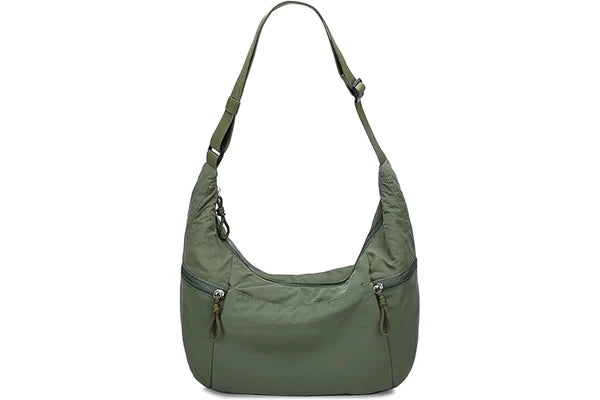
The Vaschy Crossbody Crescent Bag has a soft crescent shape and a listed capacity of 14 L. Compare it when you expect to keep your phone, wallet and a modest layer with you while carrying the farm's container separately. The curved shape is worth checking with your actual items. Shop the Deep Green Crossbody Crescent Bag if the personal kit fits and the bag stays out of the way when you move and reach.

Think about what you need first and what can stay at the bottom. Put keys where they won't fall out when you reach for the phone. If you bring a jacket, test the bag with it rolled the way you would put it away at the orchard. The crossbody makes the best case when it stays a useful personal bag after the visit too. If it gets heavy from everyone's layers, split those items or consider the tote.
Extra Large Beach Bag for layers and packaged purchases
The Vaschy Extra Large Beach Bag has a broad tote shape and is listed at 30.6 L. It is an option for shared layers and light farm shop purchases, or a permitted secondary carrier for an approved container you have checked for fit and weight. Shop the Green Space Extra Large Beach Bag if you want the tote for the wider trip and can keep the apples in the carrier the orchard specifies.

Pick it up when packed. If the sides collapse toward a rigid basket, the open tote may not carry that basket comfortably. The capacity number also doesn't tell you whether you can lift it into your trunk with the other bags around it. Try the handles on your real load, give the fruit a stable place, and keep heavier items separate. If the bag's main job is sharing layers, leave enough room for them instead of counting that space twice.

Compare the carrier before and after the harvest
Start the outbound trial with your phone, keys and layer in the personal bag. Add the items you will need at the farm according to its rules and the people coming with you. Walk to the door and check what you can reach. If you cannot lift the picking container without the crossbody moving out of place, reposition it or simplify the load. A zippered pocket you can close after paying may matter more than how the bag looks when empty.
Next, simulate checkout with an empty approved-size basket or an appropriately sized box. Give it a place to sit and test the tote as a possible outer carrier only if the farm permits that use. A box that slides in while the tote is empty may no longer sit flat once someone adds a rolled sweater. Move the sweater to another spot and test again. Check the way out of the tote as well as the way in. The best fit gives you a way to retrieve the entire carrier without pulling by a handle you can't see.
Finally, consider the distance you have to carry the fruit. A farm that offers a cart or a closer loading spot may have instructions for using it. Ask before assuming that option is available. If the group buys more than one container, decide whether one person can comfortably manage the full trip or whether the load should be divided. Someone may need to handle a stroller, open doors or make a transit connection. Assign the fruit by who can carry it, then size the personal bag around what is left. Bigger handles and more capacity cannot solve a route with no convenient place to put the load down.
What if you already have a personal bag?
Try the bag you already own on a short outing before buying. If it closes with your essentials and keeps the farm container separate, the orchard may give you no reason to replace it. Consider a new crossbody if the current bag routinely gets in the way while you pick, or a tote if your family regularly shares a layer kit and carries light purchases. Test that same bag on an ordinary grocery trip. If its extra room disappears into a single bulky item, keep that item in its own suitable carrier.
Make a plan for the trip you actually take
For a short visit with one approved picking bag, consider a small personal carry. The orchard supplies the container and you use its handles for the walk back. A bigger tote makes more sense when the group brings layers or buys several light packages at the farm shop. If one person can't carry everything comfortably, split the work by container or ask what pickup options the farm offers.
On a transit trip, check the distance from the checkout area to your stop and the transfers on the way home. Keep your fare where you can reach it independently of the fruit. Plan the harvest size around the carrying route, not just the number of apples you want. When you get home, set down the fruit first before unpacking heavy purchases. Empty the personal bag of damp layers and follow its care directions as needed.
If your own things fit in a compact carry and the orchard container handles the harvest, shop the Deep Green Crossbody Crescent Bag. For a shared layer kit and room for light purchases, shop the Green Space Extra Large Beach Bag. Decide what you'll use in the rows and what you'll carry after checkout before choosing either.


