How to Fit a School Backpack Over a Winter Coat
Try the same school load over a winter coat and indoors before choosing between a compact Vaschy backpack and a roomier two-compartment model.
Try a school backpack over the coat your child actually wears to school, then repeat the test indoors without the coat. Use the same folder, lunch container, bottle and spare mittens in both trials. If the straps work in both outfits and your child can get to the things they need, the bag is a good candidate. If they have to struggle into one strap or unpack the main compartment to find their gloves, look at the fit or layout before buying a larger backpack.
A coat can change two things at once. It takes up space under the straps, and it makes it harder to reach behind or pinch a zipper pull. You can test both in a hallway at home. At the store, try a packed bag with the real coat. An empty bag can slide onto the sleeve even when the same strap is awkward with the bag full.
Pack one ordinary winter school day
Start with the items your child carries most often. Use the actual folder with its cover, the lunch container as it will go into the bag, and the bottle you intend to carry. Add the spare clothing the school requests. For example, Lindsay Park Elementary’s winter note mentions mittens and spare dry socks. Colin Macdonald Community School’s seasonal list asks for different clothing as the weather changes. Treat those as examples. The list to pack is the one your own school gives you.
Set aside anything that stays in the classroom or only goes in once a week. If Friday is the day the snow pants come home, save that as a separate test. The everyday fit check should reflect the walk your child repeats. A bag that is larger because it occasionally needs to hold another item still has to work with the smaller load the rest of the week.
Use a little pouch for spares if it helps keep the experiment consistent. Decide whether it will sit beside the lunch container or above it. Stand the filled bag on the floor and see whether it slumps to one side. If moving a rigid bottle to another spot changes how the bag hangs, try both arrangements before blaming the shoulder straps.
Put on the coat before adjusting the straps
The Appalachian Mountain Club’s backpack fitting guide builds its process around a representative load and adjusting a pack on the person wearing it. Borrow that principle for school. Use the child’s real clothes and school supplies. Hiking-specific adjustments in the reference belong to the hiking packs it describes.
- Try the indoor outfit first. Put on the loaded backpack over a shirt or usual classroom layer. Ask the child to slip into both straps, take a few steps, then remove the bag. Notice whether the bag sits where they want it and whether they can remove it without pulling hard on a sleeve.
- Repeat with the winter coat closed. Start with the same load, including the bottle. Check whether the second strap goes over the sleeve without the child needing to force an arm through. Adjust each side in small steps. Walk a short loop and try taking the bag off again.
- Return to the indoor outfit. Remove the coat and try the bag again. If it swings or sits differently, see how easy it is to return to the indoor setting. An adult can check the adjustment before school. A child who needs to do it independently should be able to find and operate the same parts without a guess.
Stop if the child finds the setup uncomfortable. Let them point to what feels awkward before you change something. A strap catching at the elbow while they get dressed is a different problem from the bag swinging once it is on. Try a different strap shape if the sleeve catches. Repack or adjust the bag if it shifts after it’s on.
Compare a thin jacket with a thick puffer
Imagine the bag works over a fleece and a shell but the thicker puffer pushes the second strap beyond easy reach. Start by testing the actual coat the child will use on the walk. Leave room for the sleeve to pass through, then see how the packed bag hangs afterward. If a setting that makes the bag easy to put on also lets it shift more than the child likes, try another strap shape or backpack.
Look for what happens at the collar. If a strap catches a hood or crowds the collar each time the child turns their head, reset the hood and test again. Use the same coat for the next bag. It is much easier to compare two shapes with one outfit than to remember how the first bag felt over a thinner jacket.
Try the opening with the thickest mittens
Set the backpack down on a stable surface. Ask the child to keep their usual mittens on and take out the spare pair, or the item they need first at school. Watch where their hand goes. They may know the pocket and still have trouble getting enough grip on a short pull. An exterior pocket is useful for this job when the opening is usable and the pocket stays accessible with the rest of the bag packed.
Then test the main opening. Ask the child to take out the largest everyday item and put it back with the lunch container in place. A folder can fit inside the bag yet catch at a curved corner on the way in. If it comes out only after lunch is on the floor, move the small items to another area and repeat. Pick a roomier layout only if the real load keeps getting in the way.
Separate a damp pair from a dry spare
Decide what your child should do with the pair they took off. If the school wants wet items sent home, try a removable pouch appropriate for damp gear and put it somewhere that leaves the folder clear. Show the child where the dry pair goes and where the used one goes. The arrangement can be as simple as two different pouches that feel different through mittens. Empty them after the trip so the next morning’s spare set starts dry.
Find the item that is hard to put back
Suppose the first thing out is the folder, but at pickup the folder goes back into the bag after the lunch container and winter gear. Try that order. A folder that slides into an empty bag may still snag on the opening once a spare pair of mittens is resting against it. If the bag has two main compartments, load the soft pieces in one and see whether the other will accept the folder without bending its corners.
Then try a day when the school sends home an extra art project. Use a piece of scrap cardboard to represent it. If adding that piece makes the bag hard to close, decide whether it is worth choosing a larger bag for the occasional day, or carrying the project separately when the school allows it. Keep the everyday fit test as your first priority.
Compare two Vaschy backpacks with the same coat and load
15-inch Lightweight Kids Backpack for a compact kit
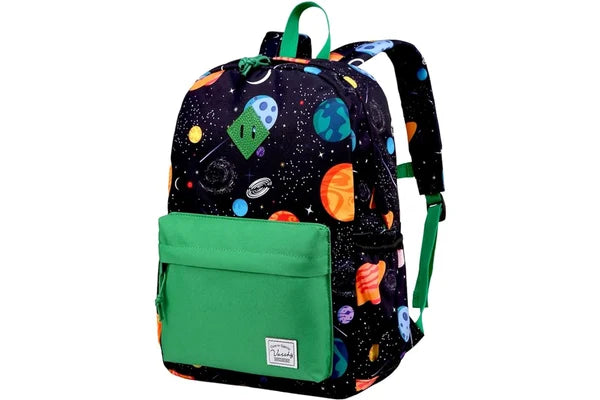
The Vaschy Durable 15-inch Lightweight Backpack for Kids is listed at 11.5 L. Its exterior measures 37 × 28 × 11 cm (about 14.6 × 11 × 4.3 inches). Try the compact shape if the everyday kit is one folder or notebook, a lunch container and a small spare pouch. Check the opening with your largest item, then try the loaded bag over the winter coat. Shop the Vaschy 15-inch Kids Backpack in Space. The same model is shown in Butterflies below.

Lightweight Classic Backpack for a separate schoolwork compartment
The L version of the Vaschy Lightweight Classic Backpack is listed at 19 L and has two large compartments and long zipper pulls. Compare it if the larger everyday kit needs space for schoolwork apart from a lunch container and spare gear. Try the pulls with your child’s mittens and check whether one compartment remains easy to use when the other is full. Shop the Vaschy Lightweight Classic Backpack in Black Plaid-L.

The difference you want to see is where the extra space goes. If your child can reach their schoolwork more easily because it has its own compartment, the larger bag may suit them. If the smaller bag already handles the day and feels easier to slip on over the coat, choose the smaller carry. Repeat the same short walk for each.

Do one final trip from the door to the coat hook
Put the packed bag by the door and run the morning in order. Zip the coat, put on the bag, pick up whatever the child usually carries in one hand, then walk a short loop. At the other end, remove the bag and find the item that comes out first. Repeat the indoors portion with the coat off. Notice which steps need help and whether that help will usually be there.
If the school has a narrow hook area or locker, test the packed bag there when possible. A long loose strap can get tucked out of the way if the bag has a suitable keeper and it remains easy to adjust. Let the school’s storage directions decide where the bag goes. Your final check should include the change of clothes as well as the walk.
For a compact bag to try with one everyday kit, shop the Vaschy 15-inch Lightweight Kids Backpack. For two large compartments and longer pulls to try with mittens, shop the Vaschy Lightweight Classic Backpack. Take the actual winter coat, mittens and largest school item to the final fit test.


