A Bag for Your First Guitar Lesson
Work out what belongs in the guitar case and what should come out of your everyday bag at the lesson.
Before your first guitar lesson, decide which items belong in the case and which you’ll need before the case opens. Carry the guitar in a suitable guitar case. For a lesson that calls for a book, a notebook and a small accessory pouch, try the case pocket first. If the book won’t lie flat there or you’ll arrive straight from school or work, a messenger or tote can carry the lesson materials while the case does its usual job.
Open your case before you spend money on a second bag. Unpack the actual guitar case and check what the studio expects you to bring. The useful accessory kit is the one you can get to with the case resting in the place your teacher points out.
Ask which equipment will be waiting for you
Before the appointment, ask whether to bring your instrument, a particular book, a pick, a tuner and any cable. Tell the teacher whether you have an acoustic or electric guitar, or whether you’re still arranging an instrument. A program that provides an amplifier may still expect the student to bring a cable or may already have one ready. Ask them to spell out which items to bring so you aren’t buying accessories that the studio lends.
518 Guitar’s first-lesson guide describes the handoff from unpacking to learning and taking practice notes. The Music Studio in Toronto gives a different example of what the studio supplies, including amplifiers for guitar and bass lessons. A La Jolla Music guide suggests bringing the instrument and any existing books or notes when you have them. Ask your own instructor which book or material they’ll use. A teacher may want to help you choose after the first lesson.
Pack the lesson items around the answers. If the teacher only asks for the instrument, a pick and a notebook, the case pocket may be plenty. If you’re carrying an existing music book or a folder of pieces, check that it can go in flat. If the teacher plans to share music digitally, ask how they want you to access it in the room before bringing an extra device. A school or work bag that’s already on the trip may be able to carry the small lesson kit without a dedicated purchase.
Decide what stays with the guitar
Check the guitar case’s own compartments and manufacturer guidance. Put a pick in a small closed pouch or other appropriate accessory storage so it doesn’t wander into the lining. If the case has a dedicated accessory compartment, see whether the tuner or cable fits without getting in the way of the instrument or the case closure. Keep a hard object out of any spot where it would press on the guitar when the case shuts. The case and its compartments should close normally with the approved kit inside.
There’s a practical question for each piece of gear. Would you need it while the case is still shut? You might want the book open while the teacher discusses the plan. You might also want the pick and tuner together when it’s time to start. A tiny pouch can keep them together, and it should have one place to go at the end. If you’re carrying a cable, coil it in its own spot so it doesn’t snag a book or stretch across the room when you reach for it.
As a trial, start with the case closed on the floor in a place that leaves the walkway clear. Set the other bag beside the chair if one is coming with you. Get the book, notebook and pencil out, then take out the items your teacher asked for with the instrument. Count how many things have to be moved to reach the last item. If opening the case twice is the only way to retrieve a pencil, put the pencil with the book before leaving.
Try the walk from the door to the lesson seat
Put on the coat you’ll actually wear and pick up the guitar case by the way it is designed to be carried. Then add the accessory bag. If you have a bus trip or a walk with a school bag, check how both straps sit and which hand can open a door. Two bags that feel fine separately can compete for the same shoulder. You might prefer to keep the guitar case in one hand and wear an accessory messenger, or take a tote for a short trip if you can set it down neatly beside you.
Measure the book or folder at its widest point, including the cover or binding. If you’re comparing an online bag listing, a listed capacity or external measurement gives you a starting point. Ask for the opening if a stiff book is close to the dimensions. At home or in a shop, use a piece of cardboard the size of the closed book to see how much clearance you need. Try lifting it straight out while the small pouch and the rest of the day’s things are packed.
Suppose an adult takes an electric guitar lesson after work. The work bag already carries a notebook and a lunch container. Add the exact closed accessory pouch, then look at what has to come out at the teacher’s door. If the notebook is at the bottom, move it beside the lesson folder or carry it separately. For a child heading straight to an acoustic lesson from home, the case pocket and a book in hand may be the easier combination for that day.
Practice the unpacking order once before you go
Picture a small room with a stand beside the teacher and no spare table. Put the case in the position where you can open it without moving the tote. Get a book to the stand first, then close the bag and set it back by your feet. If you have to bend over the case to reach a pick or a pencil, move those pieces into a pouch you can remove together. This rehearsal is also a way to check how much of your usual school kit can stay packed. A notebook you’ll use at work later can stay in the bag even when the lesson book is out.
If a parent carries the accessory bag for a child, let the student find the book and the small pouch once at home. Show them where the teacher’s note will go for next time. That makes the return trip easier if the person taking the child home is different from the person who packed the bag.
Compare a messenger and a structured tote
A canvas messenger when the guitar takes one hand
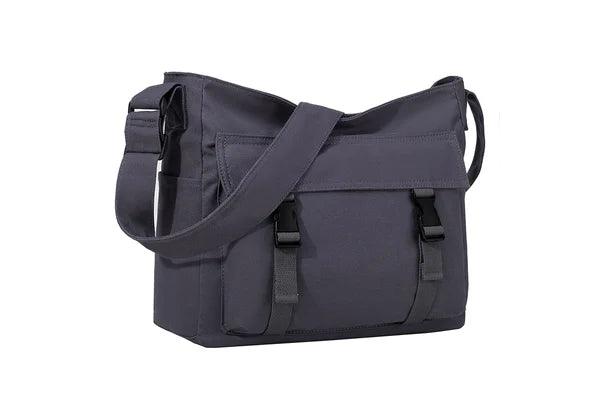
The Vaschy Large Canvas Messenger Bag listing gives an 18 L capacity and describes the front flap pocket with two buckles. Consider it for a music book and notebook alongside everyday items when the shoulder carry sits clear of the guitar case. Use the flap pocket for something you can retrieve easily there, such as a slim closed accessory pouch. The number of liters doesn’t determine whether a wide music book clears the opening. Shop the Gray Large Canvas Messenger Bag if you can reach the book and close the packed bag while keeping the instrument carry comfortable.

Try a dry run through a doorway and place both carriers where they’d sit during a lesson. If the shoulder strap wants to slide against the guitar case strap, move the messenger to the other side and try again. If you have to spread the bag open across a chair to pull out the book, a different arrangement may save time in a small teaching room. Keep the case clear of both straps when you set it down.
A structured tote for the book and notes
Vaschy describes its Canvas Tote Bag for Women as a structured tote with top handles and a detachable shoulder strap. Try it when you expect to set the bag beside a chair and take out a notebook and a pouch. The handles give you an option on the short stretch from the car or reception area. With the strap on, test whether the tote stays close beside the case. Shop the Sky Blue Canvas Tote if your lesson book fits through the opening and you like the choice between hand carry and the shoulder strap.

If the book only fits diagonally, check whether taking it out pulls the accessory pouch along with it. Try leaving the pouch on the side away from the binding. A loose pick, a bottle and a sheet of practice instructions have different places in the bag. Keep the small things together, and use your actual book’s shape to decide whether the tote gives you a better reach than your current bag.
Leave the room with the next practice session in mind
When the teacher gives you something to practice, write down the first task in a place you’ll open again at home. That can be the notebook you already brought or a clearly named note in the format your instructor uses. Ask which piece or exercise to start with and whether you’re taking any paper. Slide a loose handout into a folder before the case goes back into your hand. A separate pocket that you never open at home may be a poor place for the most useful instruction you receive.

Put the pick and tuner away while the case is still in the room and you can see where each one goes. Do a quick look at the chair, music stand and floor around your feet before leaving. If the studio lent an item, return it to the place they specify. For a follow-up lesson, remove anything you carried as a precaution and never took out. The smaller kit can tell you whether an everyday bag is enough.
If you’re juggling the instrument and a book on the commute, shop the Gray Large Canvas Messenger Bag if the strap and packed opening pass your test. If you prefer to set the materials beside your chair and reach straight in for the book, shop the Sky Blue Canvas Tote. Start with the actual guitar case, the teacher’s short list and room for one new piece of music.


