How to Choose a Backpack for Class and the Campus Gym
One bag can work for class and the gym when it fits the actual locker and keeps study gear easy to reach on the trip back.
Choose a class-to-gym backpack that fits your campus locker when it holds the full day’s load. Try the bag with shoes, class materials and anything you’ll bring back after the workout. Measure the clear locker opening and watch where the straps fall. A fully loaded pack has to pass through that opening before its listed capacity is of much use. Check whether you can reach a notebook at the next stop without opening your used gear.
Check the locker you can actually use
Look up the recreation facility you’ll visit between classes. Check who can use its lockers, what you need to close one, when it has to be emptied and where you can keep your bag while you exercise. The Princeton Campus Recreation locker guide distinguishes day-use lockers from rentals. The University of Illinois recreation policies are a separate example of facility-specific rules. If you use a commuter locker on campus, treat that as another location with its own access and time limits.
Ask the front desk about clear opening width, height and usable depth. A shelf, door hinge or latch can reduce the space available to insert a loaded bag. Include the route to the locker. If you have to pick up equipment or present a credential on the way, choose a spot for that item that doesn’t require unpacking the work or class compartment. Plan around the locker options at your facility rather than the dimensions of a generic locker.
Pack the full day in the order you’ll use it
Start with the notebook, folder or device case you’ll need before the workout. Add shoes in a separate carrier that suits the condition they’ll be in on the way back. Place the clothes and towel where you can remove them without taking the school kit out in the changing area. Follow the facility’s requirements for the items you bring. If you’ll shower, put the personal-care pouch in the position where you can reach it while holding the towel.
Put the gym credential where you can reach it with the main zipper closed. Rehearse that move with the shoe carrier already in the bag. Test reaching it with one hand free. Give the class materials a second, separate position. If you have to sit down and pull several things out to find the item you need for check-in, try moving the item before buying more bag space.
Practice putting the bag through a smaller opening
- Load the largest items you carry. Close the pack in its everyday shape and measure around any bulge that sticks out.
- Use a cardboard outline or two boxes to make a stand-in for the clear opening. Include the space the door actually gives you rather than the outside width.
- Slide the bag inside in the position you’ll use. See where the handle and straps land. Try a second orientation if the first catches on a corner.
- Remove the bag and run the same exercise with the used gear and shoes in their return position. Test the class pocket without laying the gym kit out on the table.
If you have to press on the backpack to make it fit, locate the rigid object that makes the bag wide or deep. A hard lunch container and a pair of shoes can both change the shape when you put them next to each other. Try a different arrangement or take a smaller load. When you can make a choice in person, try the real locker rather than relying only on the paper model.
Make a mock locker that includes the latch
A strip of cardboard taped to your test opening can stand in for a lip or latch that sticks into the space. Make it the size the facility describes if you know it. Bring the loaded bag up to the opening and start it in the position you usually carry it. Even if it can enter sideways, see whether you can lower or rotate it after the first rigid corner goes in. If a strap hangs below the shelf, gather it within the space where you’ll put the bag. Follow the facility’s own procedures for closing and clearing the locker.
Now simulate a day when lunch, a device case or a textbook makes the load bigger than usual. Set the two widest objects next to each other and try getting them through the opening. Then move one of them higher in the bag and try again. Keep the closure easy to operate. A bag forced into place may be just as difficult to retrieve when you are hurrying to class. Time a normal insertion and removal if it helps you compare candidates, using the same load for both.
Give the return load its own packing order
Suppose you’ll go to a seminar directly after the gym. The seminar starts with a printed reading, so that’s the first thing you need after checking out of the locker. Put the reading in the spot you plan to use, then place the shoes in their own carrier. Add used clothes or a towel in a suitable separate pouch. Close the bag and walk to a chair that represents the seminar room. Open only the space you need for the reading. If it lifts out cleanly without setting the gym kit down, you have a workable order for that day.
Try a different day when there’s a study stop before the workout. The larger class load should stay available without needing to reach around a hard shoe pouch. If one bag design lets the shoe package stay out of the way, that may be more helpful than another zipper or extra room. Switch the test to the actual clothes and shoes you use. A pair of trainers and a bulkier pair may line up differently, especially if you put them heel to toe.
Plan what you’ll do at home when the bag needs to return to class-only use. Take out the used-gear pouch, follow its care directions and check that the class materials are still in the place you expect. A removable pouch makes this easier if it comes out as a unit. If it keeps catching on a book corner, change its position before you leave in the morning.
There’s also a day when a single bag may not be the simplest choice. If campus storage is limited and you have a longer class load, check whether you can take a different route or make a separate trip to the gym. If you routinely have to force a large object through the entrance during your trial, check whether that object needs to go at all. Select the pack that matches the normal trip and has a workable plan for the occasional fuller day.
Repeat the locker trial with the bottle removed, since you may take it onto the gym floor if allowed. Check whether the remaining contents still hold their shape and whether you can close the door without trapping a strap.
Compare a simple main compartment and two large compartments
For a short session and a smaller kit
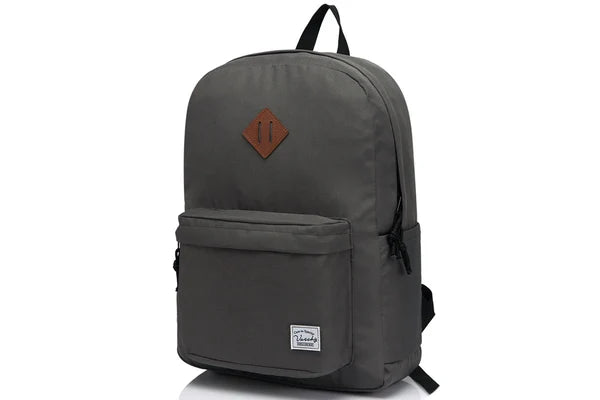
The VASCHY UltraLight Backpack is listed at 20 L with a zippered main compartment, a file divider, an exterior front zipper pocket and two side bottle pockets. Try this layout if most days you carry a few class materials and a compact gym pouch. Use the divider for the papers that fit and keep footwear in a separate carrier. Check whether the school and gym items can come out in the right order from the same compartment.
Test the pack after the clothes are in their return pouch. If they move in front of the folder when you lift the bag, adjust the layout and check the zipper again. A straightforward compartment may be enough when your class kit is thin and you can use a light, removable gym pouch.
Shop the Vaschy UltraLight Backpack in Dark Gray if you want one main compartment for a modest daily load.

For two groups of items that you need at different times
The VASCHY Lightweight Classic Backpack is listed at 19 L and has two large compartments and two front zipper pockets. Try giving separate compartments to class items and to the closed gym pouch. Use the available front pockets for the things you’ll need before unpacking. Compare the fully loaded shape with your actual locker and test whether both compartments still open cleanly.
Two areas can make the changeover clear, but a rigid item may affect how the other area packs. Use the shoes you wear rather than assuming they’ll fit from the listed volume. Practice removing the class materials when the gym load stays inside.
Shop the Vaschy Lightweight Classic Backpack in Blue Green-L if two large compartments fit your class-to-gym sequence.


Plan the first move after your workout
Pack shoes and used items in suitable separate carriers before putting them back. Keep the next class’s materials reachable. Empty and air out used items when you get home according to their own care instructions. Before you leave the gym, check the locker and return any borrowed item as directed.
Questions about class-to-gym storage
Should I buy a larger bag if the locker is small?
Measure the clear opening and test the current load first. A different arrangement or one fewer bulky item may help more than a larger pack.
What if the facility has no suitable storage when I arrive?
Ask the facility what it allows. Check other available storage or take a smaller permitted load for that day.
Choose the backpack for both halves of your day
For a short change and a simple arrangement, shop the Vaschy UltraLight Backpack. If you’ll open the gym and class kit at different stops, shop the Vaschy Lightweight Classic Backpack and try the loaded locker test before committing.


