How to Choose a Backpack for a Junior Ranger Day
Give the field booklet a place you can reach at a stop, then decide which supplies your child carries and which go in the adult bag.
A Junior Ranger backpack should make the activity booklet easy to retrieve and hand back. Find the pickup and return points first. Then try the actual folder or a paper mock-up in a small child’s backpack and in the adult bag. Choose the setup your family can open and close several times without a bent page or a missing pencil.
Map both visits to the desk
The National Park Service Junior Ranger overview describes visiting a participating site, doing activities and following the site's instructions for completion. At Voyageurs National Park, the directions include getting a booklet and presenting it after completion. Some programs or locations work differently. In Canada, Point Pelee’s Parks Canada Xplorers program gives its own pickup and visitor centre return instructions. Use the page and current operating details for the park you will actually visit.
The first place you go may not be where you finish. If the visitor center is a separate stop from the outdoor activities, look up its hours on the day you’re going. Make a note of where the child can hand the booklet back. Decide how that affects the day’s route and how often the bag must be opened. Start with the things the program requests, then add what the rest of the visit requires.
If there is a download for your location, print one page in the format you expect to use and bring that to your packing test. The NPS booklet directory has examples of downloadable activities, but no single booklet shape applies to every park. If you’ll pick up a printed copy on arrival, leave enough room for a backing sheet or folder and adjust the layout at the desk. Don’t assume a pocket fits because it held a similarly named activity book at a different park.
Give the booklet a home the child can recognize
Put the practice sheet in a folder, slim sleeve or other backer that fits your outing. Leave a small edge to grab. Ask your child to take it out and put it back while the bag rests on a chair. Watch which hand holds the bag and which grabs the folder. If they pinch the paper itself, a holder with an exposed edge can make the job easier. Try it again once a snack or a layer takes up some room.
Choose one spot for a pencil. It can live in a simple pouch or a small zipper pocket as long as it goes back there every time. If you bring an eraser or a spare pencil, keep it together with the main one. Test access while the booklet is out. A pocket might be easy when the child has two free hands and frustrating when one hand is already holding a page open.
Try writing one line on the mock booklet away from a table. Use the backing support you would actually bring and see whether it can rest on your lap or another suitable surface. If it’s hard to do while standing, plan to stop at a place where you can get settled instead. Leave enough room to put all the materials away while they are still in order. There is little value in gaining a few seconds at the opening if you have to rebuild the whole kit afterward.
Make the envelope survive the walk back
Close the booklet and put it in its holder with the part you grab facing up. Walk around the room, set the bag down, then remove it again. Check whether other gear dropped into the same area and interrupted the path. A bottle or heavy layer can change where a paper holder sits. If the booklet is still easy to pull out, fill in another mock line and give it back to an adult to rehearse the final handoff.
Split the family load by who needs each item
Give your child the items they use repeatedly if carrying them works for your family. Keep shared or bulkier gear with the person who will reach it most easily. On a short visit, that might mean one child bag for the booklet and an adult bag for shared items. On a longer day, a single adult bag can be easier if you stop together and the handoff is simple. Let the child decide how much of the routine they want to handle.
Talk through an example before loading up. Suppose you’re halfway through an activity and need to stop for a drink. Can an adult access shared water without pulling out the papers? Can the child put the pencil away while holding the folder? Try changing roles if you have two children completing different pages. One clearly marked folder per child can save time even if a single person carries both.
Use your chosen bag at its normal strap length with the clothes and layer the wearer expects to use. Test putting it on and setting it down. If the child wants help getting it on or needs the adult to open every pocket, that can be a good reason to split the load differently. Choose for the real pace of the group and the needs of the site. These checks don’t establish a safe carrying weight or a universal fit by age.
Practice an activity with two different stopping points
Imagine that the child reads a question in one place and finds the answer in another. Put a note on a table and a second note across the room. Have the booklet carrier open the bag at the first stop, put the paper away, walk to the second stop and find the same page. A loose pencil gets annoying quickly. A flat holder with a grab edge and one known writing-tool pocket can make the routine easier to repeat.
Next, switch roles as you might late in the day. Have the child hand over the booklet and pencil while the adult is already carrying the rest of the gear. If the adult has to start over with the whole layout, set up a single holder that can move intact from one bag to the other. For two children, try two slim paper holders with visible names on the inside or distinguish them by color. Keep the identity of each booklet easy for the family to recognize without displaying names on the outside of the bag.
At the final handoff, mark the page you expect to show if the site tells you what it will review. Test putting a completed booklet and any keepsake away separately. This last step is a good check on whether the bag works past the initial excitement of opening it.
Try the two backpack roles before you choose
A child carries their own paper-and-pencil kit
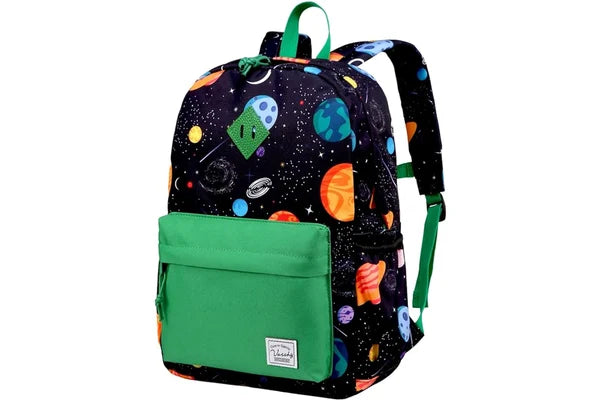
The 15-inch Vaschy Lightweight Backpack for Kids is listed at 11.5 liters. It’s a candidate for the child who wants to keep the booklet kit and a few appropriate personal things together. Start with the exact folder and use the principal opening to rehearse the reach. The listed capacity is a starting point for comparison. The folder and its backing still have to pass through the opening and rest without being bent.
Shop the Vaschy Lightweight Backpack for Kids in Space if the child wants their own pack and the actual folder, layer and personal supplies fit comfortably together. Let your child try repacking after the outing-style practice. If they can’t find the booklet quickly without a reminder, move one item or simplify the kit.

One adult carries booklets and part of the shared load
Vaschy lists the UltraLight Backpack at 20 liters. It has a zippered main compartment with a file divider, an exterior front zipper pocket and side bottle pockets. Try the divider with the largest holder first, then set the day’s essentials in the rest of the bag. A front zipper pocket can keep writing tools separate when several family members use the same bag. Test your own bottles and the folder rather than inferring fit from the product listing.
Shop the Vaschy UltraLight Backpack in Baby Blue if one person is going to carry the paper kit and additional family layers. Try letting the child open the booklet holder while the adult keeps the bag steady. That simple arrangement may be easier than handing over a fully packed backpack at each stop.


Pack for what happens after the last page
Do I need a new bag just for the program?
Run the folder and pencil test with a bag you already have. Check that the opening stays easy when the rest of the load is inside. If it works and your park’s other requirements are met, keep using it. Compare new bags when you can point to a specific recurring inconvenience, such as bending the folder or taking everything out to reach the pencil.
Where should a badge or keepsake go?
Ask the site how program completion works. If the child receives a keepsake and doesn’t plan to use it right away, make room for it in a closed pocket that’s easy to remember. Put the completed booklet back in its own holder. That keeps the paper easy to find later and avoids mixing a small loose item with the working gear.
Choose the bag that keeps the booklet moving
The most useful packing test is opening and closing the bag several times with the same folder in it. Keep the child’s kit small enough to use, and make sure an adult can take over if the plan changes. Shop the Vaschy Lightweight Backpack for Kids for a child-led paper-and-pencil kit, or shop the Vaschy UltraLight Backpack for an adult carry where a separate file area and a roomier main compartment suit the day.


