How to Choose a Backpack for an Expanding Accordion Folder
Test an accordion folder at two realistic thicknesses before buying a backpack. Compare a shared main space and two compartments using the full school-day kit.
Fill and fasten the accordion folder before you compare backpacks. Try a normal day and a fuller school week, then add lunch and the rest of the kit. A shared main space can work if the file has a clear route out. Compare two large compartments if a separate opening makes it easier to get the file back in.
Decide which papers really make the daily trip
Start with the school supply list or course instructions. Keep required binders, lab records and folders in the specified format. If an accordion file is part of the system you use, put in the papers you currently need for those classes. Include the handouts that are waiting to be returned, the reference sheets you use and the dividers or tabs that stay in the file.
Landmark Outreach’s materials-management guide distinguishes daily working papers from a master filing system. Use that distinction as a question for your own routine. Which papers must travel today, and which belong in the archive your teacher asks you to keep? You can review what travels before deciding how much backpack space the file needs. Landmark’s paper and digital filing guide explains its approach.
Make the first bag test with the current working file. For a second test, use a fuller version that represents a plausible week of additional handouts. Keep the contents within the file maker’s instructions and close it normally. An almost-empty file from the first day of term can make the available backpack space look generous. The version you use after several classes is a better object for the purchase decision.
Measure the file in two filled states
Include the closure and the widest part
Fasten the file using its intended flap, zipper or elastic closure. Measure the complete width and height, including any tabs or handles that extend beyond the cover. Measure the maximum depth with the papers inside. Look at both the lower folded gusset and the upper area near the flap. The thickest part may change as the pockets fill.
Write down both depths, the normal day and the fuller week. Use inches and centimeters if that helps compare the listings you browse, but label what you actually measured. A sheet-size label describes the paper a file holds. It leaves out the shell, dividers, closure and the space taken up by the filled pockets.
Five Star’s six-pocket expanding file, for example, is described with a flap and a bungee closure. That is a useful reminder to include the actual closing parts in the outline. Use the complete file you own for the bag test rather than the dimensions of a sheet of paper. The manufacturer’s file listing shows that particular design.
Keep the fuller outline for shopping
If you cannot take the file with you, trace its closed outside on a piece of cardboard and write both depth measurements on it. Mark the side you normally grasp. Add a second piece of folded cardboard to represent the fuller thickness for a rough opening check. Use the template to rule out obvious obstructions, then finish with the real file and normal school load when possible.
Place a small note on the template identifying what was inside when you measured it. You might write that it included current work for the classes taken that day and papers waiting to be handed in. Keep the note for the next test. It records the papers that actually travel, so you can tell when the load has changed.
Test the filled file through the backpack opening
Open the backpack the way you would beside a classroom chair. Put the file through with its flap fastened and its tabs in their normal position. You should be able to guide it through without folding the cover or pulling at a divider tab. Watch the zipper ends and any internal pocket that sits beside the opening. A file can fit the lower body of a pack and still have an awkward entry path.
Set the file down inside, add the rest of the kit and close the pack normally. Try it with the actual lunch bag or container if that travels inside, along with the notebook and pencil case you need. Keep the packed lunch arrangement appropriate for its contents and instructions. If it takes the same depth as the expanding file, find out where each item can sit without pressing the file closed.
Now retrieve the file while the other items stay in place. Note anything you must take out first. A separate pouch might be easy to move once at home but inconvenient several times during a school day. Change the packing order and try again before assuming you need a larger backpack.
Return one handout with lunch still packed
Take the closed file out of the bag and set it on a table. Open the correct section, add a sheet of scrap paper and fasten it again. Return the file while the notebook, lunch and other items remain packed. This checks a slightly fuller shape as well as the direction of the flap and closure. It is a different task from sliding the empty file into a display backpack.
Repeat with the busy-week version. Use the file’s normal closure, then put it back without holding its sides squeezed together. Notice whether an elastic loop or the edge of the flap catches the pack’s zipper. Try a different orientation with the part you grasp near the opening, while keeping the file in its intended carrying position.
For a student who will do this independently, let that student run the test. Put the pack beside the chair and keep the tabletop to the space they are likely to have. An adult’s hand can find a route that a student cannot use comfortably. Ask them to show where the file goes and how they would close the backpack before moving to the next class.
Compare one main space and two large compartments
A shared main area for a clearly contained kit
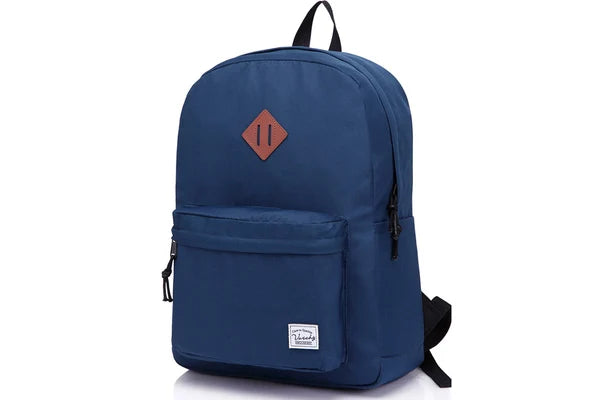
The Vaschy UltraLight Backpack is listed at 20 L. Its described layout includes a top-loading zippered main compartment, an internal file divider, a front zip pocket and two exterior bottle pockets. Try it when your file, notebook and other items can share the main area with a clear removal route. Test the divider with the filled file only if the actual opening and depth suit it.
A file divider can assign papers a position within the same main space. Check whether it continues to do that when the accordion file thickens. If the fuller file needs a different resting place, see whether that leaves the notebook and lunch accessible. The useful layout is the one that supports the file in both realistic states.
Shop the Vaschy UltraLight Backpack in Dark Blue if you prefer a straightforward main area and your complete school kit passes the two-depth test. Keep smaller supplies in a consistent position so they do not drop into the route you need for the file.

Two compartments for an independent paper route
The Vaschy Lightweight Classic Backpack listing describes two large compartments, two front zip pockets, side pockets and internal mesh and pen organization. Its listed capacity is 19 L. Compare this layout if you want the accordion file and the other daily items to be reached through separate large openings. Try the full file in each suitable compartment and choose the route that lets it enter and leave cleanly.
Load the neighboring compartment before judging the result. The file needs to work with lunch and the other belongings already in the pack. You may find that one area opens more conveniently from beside the chair, or that the other leaves a clearer position for the file’s upper flap. Run the handout-return test after both compartments are filled.
Shop the Vaschy Lightweight Classic Backpack in Lavender Plaid-L if the two-compartment arrangement gives the filled file an independent route. Compare it with the UltraLight using the same folder, lunch and notebook. The capacity figures alone do not identify which layout will work better for this particular kit.

Repeat the test when the week’s contents change
Try the school day at two points. The first is the morning with the file, lunch and normal supplies packed. The second is later in the day with returned papers added and the lunch container in its return condition. For a clean rehearsal, use scrap paper and an empty lunch container. Ask the student to add one sheet to a rear section and one to a front section, close the file and put it back. Notice whether either end has become thicker or harder to guide past the lunch. You may need a different position for the lunch container, a simpler pencil pouch or another compartment arrangement.
Include a folded layer if the student regularly carries one. Put it in after the file is positioned, then take the file out again. A soft garment can spread across the top and hide the grab edge. Give it an assigned place so the paper route stays recognizable. If it makes both backpack options difficult to close, review the entire load and the storage available at school.
After trying the packed bag on, set it down and repeat the removal once more. Contents can settle during a walk. If the file has moved below something else, change the arrangement and take another short walk around home. Keep the carrying test practical for the student and the route they actually use.

Keep the working file within a repeatable range
Review the contents at a time that fits the class routine. Follow the teacher’s directions about what to keep and where to store completed work. The aim is to keep daily papers easy to identify while retaining the material that is supposed to be saved. If the folder becomes much thicker than your busy-week test, check what changed before choosing a larger bag.
The Betty Brigade’s school-paper organization guide discusses handling current papers and keeping material at home. That provides another way to think about the carry limit. Let the actual school requirements decide which papers stay available and which can leave the daily file. Its school-paper guide describes the broader home routine.
Questions before choosing a backpack
Will a backpack that fits Letter paper fit an accordion file?
Compare the complete closed file and its loaded thickness with the usable opening. A file made for Letter sheets includes its own covers, pockets and closure. Use the exact file at both realistic fill levels.
Does the file need its own large compartment?
Try the removal and handout-return sequence with the other items packed. A shared area may work when the route stays clear. Two compartments are worth considering when a separate opening makes that routine easier to repeat.
Shop the Vaschy UltraLight Backpack for a shared-main-space arrangement, or shop the Vaschy Lightweight Classic Backpack if the second large compartment helps the filled file stay accessible. Choose after the student has tried the busy-week load and returned a paper with the rest of the bag still packed.


