What to Carry to a Tailor Fitting
Bring the right outfit pieces to the fitting and choose a bag that separates shoes, garments and paperwork.
Lay out the outfit you’ll wear with the altered piece before you choose a bag for the fitting. If you’re hemming trousers, start with the shoes. If you’re adjusting a jacket, start with the shirt or sweater that will go underneath. A structured tote can work for a folded garment and a modest pair of shoes. A backpack is worth comparing if you’ll walk farther or use transit. A long, structured or already pinned garment may need its own carrier.
Before you add anything else, ask the shop whether you’ll try on the piece at this visit or simply drop it off. Decide whether to wear it in, carry it folded or bring it on a hanger. The same pair of pants can mean two different loads depending on whether it will stay with the tailor after the fitting.
Build the outfit that the tailor needs to see
SARTO’s alterations guide starts from the garment on the body. It asks clients to bring other pieces that affect the fit. Fatima’s alterations FAQ makes the reason for the shoes clear for hemming, and MOUA’s guide discusses fit assessment for several types of clothing. Ask your shop which pieces will make the biggest difference for your appointment. A fitting for a loose everyday sleeve and an assessment of a formal jacket can call for different layers.
Put on the outfit at home for a minute. With the pants and the intended shoes on, note what you want to change, such as the fabric brushing the top of the shoe or the way it hangs while seated. If you wear a certain belt with the pants, ask whether it’s useful at the appointment. For a jacket, check what will go underneath. This gives you a short packing list and a more specific way to explain what you’re after at the counter.
If you regularly wear the same trousers with two very different pairs of shoes, decide which outfit matters most before filling the bag. You can discuss both with the tailor. Bringing two pairs makes sense if the fitting really depends on comparing them and you can carry both. A reference photo on your phone can show another outfit, with the actual pair available for the change you’re asking the tailor to mark.
Pack the shoes as one removable unit
Put the shoes in a clean pouch or another suitable wrap with the soles contained. If they have hardware or a stiff heel, see where those parts sit against the folded garment. Set the pouch beside or below the clothes so you can lift it out without dragging it across the fabric. If the pieces press together when the bag closes, carry the shoes separately or wear them to the appointment when that’s practical.
Try the shoe change beside a chair. You may set the bag down, take out the shoes and change into the trousers. Where does the clothing you arrived in go during that time? Put a little space aside for it, or ask the shop where you can leave your things during the appointment. A folded pair of jeans and the same pair stuffed quickly into a carrier take up different space. Test the less tidy version if you’re likely to pack in a hurry.
For example, someone stopping by a tailor after work might wear their usual walking shoes and bring loafers for the hemming. The day bag needs to carry the loafers and the garment on the outbound trip, plus whatever they wore into the fitting room. If they can comfortably walk in the loafers that day, wearing them reduces the load and may make an existing tote sufficient. Either way, keep the work badge or keys in the spot you can find after changing.
Give the garment the right kind of room
Ask the shop how it wants you to bring the piece. For everyday trousers that can be folded, use a fold that leaves the garment easy to lift and unfold at the counter. For a suit jacket, a long dress or something that has already been pinned, follow the shop’s instructions about a hanger or a garment bag. If the item needs separate support, use the everyday bag for shoes, layers and personal items. Some tailoring work depends on looking at the garment’s construction in person, so a bag decision should leave the tailor the item in the condition they requested.
Measure your actual folded garment or the shoe pouch against the narrowest point at the bag opening. Put the largest item in first, then add the second item and close the bag. Try taking the garment out in one movement without putting the shoes on the floor or emptying the personal pocket. A bag that looks roomy from the outside can have less useful clearance at the top, especially if a rigid pouch sits crosswise.
Check the space you’ll have while changing
Try the whole sequence beside a chair at home. Take the trousers out and put the clothes you started in where the trousers were. Take out the fitting shoes, then pack the walking shoes or put them where the shop says they can go. Turn around and check whether you can still reach the things you normally keep at hand, such as your phone or a transit pass. This is where a rigid shoe pouch can make a roomy-looking bag hard to use. It needs a place even when the garment is out and the clothes you wore in are folded less neatly.
If you’re bringing two garments, give each one a specific purpose. One pair of pants could be getting a hem and the other could be a reference for a length you like. Ask the tailor whether they need the reference pair or can work from your explanation. Keep small pieces, such as a detachable belt, with the garment they belong to so they go to the right place when you unpack. If one piece will be left with the shop and the other will go home, make that distinction before you close the bag.
Consider your other stops on the same trip. A bag that gets you from a car to the fitting room may have to carry the garment through a longer walk afterward. If you’ll add a lunch container or other purchase on the way home, decide where it will go before leaving room for it at the expense of the fitting kit.
Compare a structured tote and a two-compartment backpack
A canvas tote for a counter or fitting-room bench
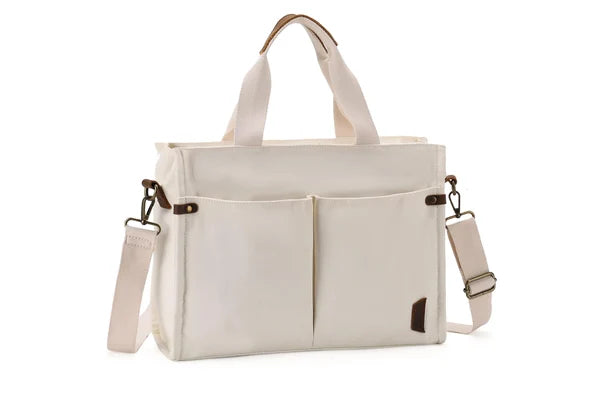
Vaschy describes the Canvas Tote Bag for Women as a structured tote with a detachable shoulder strap. The tote is worth comparing when the folded piece and the shoe pouch can sit beside each other and you expect to put the bag down at the counter. Try lifting out the clothes with one hand while the other keeps the tote steady. Shop the Beige Canvas Tote if your folded piece clears the opening without pressing on the shoes and you prefer to reach into the bag from above.

Use the detachable strap if it lets the bag stay comfortably at your side on the way to the shop. With the bag set down, check where the strap falls and whether it catches on a hanger or gets in the way of an outer layer. Keep a receipt or pickup reference away from the shoe wrap. When you get home, leave it somewhere you’ll check before the collection trip.
A backpack for walking or taking transit
The L version of Vaschy’s Lightweight Classic Backpack is described with two large compartments and front zipper pockets. Compare it when the walk is longer, the two main areas suit the way you separate a shoe pouch and a folded garment, and you want both hands free on the route. Check each compartment’s actual shape with the other one filled. Shop the Black Plaid Lightweight Classic Backpack if you can close both compartments with the planned load and you can take the garment out without unfolding it across the counter.

With a full backpack, a shoe pouch can still push into the neighboring space. Put the largest shoe into the intended compartment and close it before adding the clothes. If you see the folded garment bending more than you want, move the shoes to a separate carrier or use the backpack for personal items on the trip. The right choice is the one that works when all the pieces are inside together.
Plan a second trip with a different load
The fitting bag may come home with just shoes, the shirt you changed out of and the pickup information. When the shop tells you the piece is ready, ask whether it will be on a hanger or folded and whether you’ll try it on again. You might need to bring the same shoes back to confirm the length. If the shop hands you a pressed item on a hanger, carry it the way they recommend and use the bag for the shoes and other small things. If you take transit, think about what you can hold from the counter until you’re seated or home.

Before the first trip, put the pieces by the door in the order you’ll take them out. Make a second short list for pickup while the instructions are fresh. A fitting-room pouch for a pair of loafers, a flat place for the receipt and a garment you can lift out without moving the shoes are better tests than the appearance of an empty bag.
If you prefer a bag you can set beside the bench and open from above, shop the Beige Canvas Tote after the garment-and-shoes test. If the walk calls for two shoulder straps and both loads fit the separate compartments, shop the Black Plaid Lightweight Classic Backpack. Carry a delicate or long piece separately if that’s how your tailor wants it to arrive.


