How to Clean a School Backpack Without Guessing the Care Rules
Check the care label, inspect pockets and trims, choose a permitted cleaning method, and make sure your school backpack is dry before repacking.
The school bag is empty, but the front pocket still holds pencil shavings, the bottle pocket has a sticky patch, and the bottom looks ready for a reset. Before reaching for the washing machine, check what the bag's care label actually permits.
To clean a school backpack, empty every pocket, check its care instructions and trims, and choose the least extensive permitted method that handles the mess. Remove loose debris first. If spot cleaning is allowed, treat the affected area with the approved supplies, then let the bag dry fully before repacking. A fabric name or another brand's washing guide cannot settle the care rules for your particular bag.
This guide helps you make that decision and plan around the next school day. The Vaschy examples identify features worth checking; they are not a substitute for the care label on your own backpack.
Before you clean, answer three questions
What does this bag's care label allow?
Look inside the main compartment and along interior seams for a label. Read the whole instruction, including any limits on water, detergent, washing machines and drying. Keep it nearby while you work, or take a clear photo so you can refer to it without turning a damp bag inside out later.
If the label is missing or unclear, find the exact model in your order details and ask the manufacturer before a wet clean. A general instruction such as "hand wash" may still leave questions about immersion, temperature or separate trims. Ask rather than filling in those details yourself.
Whirlpool's backpack care guide also puts the care label before choosing a washing method. That order matters: a machine setting suitable for one backpack may be unsuitable for another.
Which parts need different attention?
A backpack has more than an outer fabric panel. Look for a coated lining, padded areas, decorative patches, leather pulls or a suede base. Check whether the instructions address those parts separately. Do not assume a cleaning product suitable for one panel is suitable for every surface.
For example, the Vaschy ClassicPack is listed with a suede bottom and leather zipper pulls. Those are reasons to check trim care before adding water or a cleaner. The product listing does not provide a specific washing procedure, so it cannot authorize soaking those components.

When does the bag need to be ready?
If the bag needs to leave for school tomorrow morning, plan for drying before you start. A school break gives you more room for an extensive clean.
You can remove loose crumbs and identify the mess now, then schedule a permitted wet clean when you have time to let every pocket dry. If a spill needs attention immediately, follow the care guidance and arrange another bag for school. A deadline is not a reason to replace air drying with an unapproved heat source.
Choose a cleaning job that matches the mess
Different problems need different decisions. Use this table after reading the care label, not as permission to override it.
| What you find | A useful starting point | Before going further |
|---|---|---|
| Loose crumbs, sand or pencil debris | Empty the compartment and remove loose material gently | Check small pockets and seams before introducing moisture |
| One dirty patch on a fabric panel | Consider local cleaning if the label permits it | Confirm the cleaner and technique are suitable for that panel |
| A sticky spill inside a pocket | Remove the contents and identify the affected surfaces | Check lining and trim instructions; let that pocket dry completely |
| Dirt on suede, leather or an unfamiliar finish | Keep the area separate from your fabric-cleaning plan | Get material-specific care guidance rather than improvising |
| A bag that seems dirty throughout | Decide whether a more extensive clean is authorized | Confirm the method and leave enough drying time or use a backup bag |
Crumbs from a snack pouch may only need clearing out. A drink that reached the lining and padding is a larger job, even if the outside looks almost clean. Find where the mess went before choosing how to clean it.
Check the pockets you actually use
It is easy to empty the obvious compartment and miss the place where the problem started. Put school supplies on a clean surface and check one section at a time.
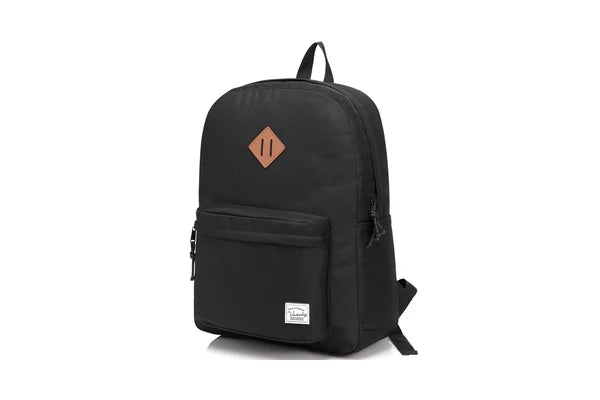
The current Vaschy UltraLight Backpack listing identifies a main zippered compartment with a file divider, a front zipper pocket and two side bottle pockets. For this layout, a useful inspection route is:
- Lift out folders and notebooks, then check both sides of the file divider.
- Open the front pocket and remove pens, wrappers and small items.
- Take out the bottle and check both side pockets, including the one that usually stays empty.
- Look along the base and accessible seams for loose debris.
- Check the back panel and shoulder straps for dampness or visible dirt.

The ClassicPack has a different arrangement, including internal zipper pockets and a padded device pocket. Open those pockets too. Remove any device before cleaning, and avoid forcing a fixed divider or lining outward to reach a corner.
Use this route to find forgotten items, not to decide washability. If you own a different Vaschy model, follow its actual pocket layout and care label.
Looking for a simple main compartment, file divider and separate bottle pockets? View UltraLight colors and product details to compare its layout with your school routine.
Set up before a permitted wet clean
Once you know the allowed method, gather only the supplies it calls for. Separate items that belong back in the bag from items that need their own care. A lunch container, bottle and pencil case should not go back in simply because the backpack is clean.
Check for loose stitching, a damaged lining or a zipper that catches. Pull a stuck zipper slowly and look for a trapped edge of fabric. Do not tug hard or pour a cleaner into the zipper as a shortcut. Damage or a difficult trim may be a reason to ask for guidance before continuing.
Clear enough space to work without the bag brushing against a dirty floor. Keep books and electronics well away from the cleaning area. If you are using a cloth, choose one that is clean and does not visibly shed fibers or transfer color.
Leave fixed padding, dividers and straps attached. A component that looks removable may not be intended to come off. Only remove parts when the bag's instructions explicitly tell you to do so, and keep any permitted detachable pieces together.
If spot cleaning is allowed, work on the affected area
Follow the care instructions for the cleaning agent, amount of moisture and technique. Do not automatically add detergent because another backpack guide recommends it. Different manufacturers publish different rules, which is precisely why your bag's guidance comes first.
If the permitted cleaner's directions call for a test in an inconspicuous area, complete that test and check the result before treating a visible panel. A hidden test is still subject to the backpack's own care rules; it does not make an unsuitable product safe.
Work gently on the affected surface. Watch where moisture is going, particularly near a pocket seam, padded section or contrasting trim. Remove cleaning residue in the way the instructions specify. Avoid expanding a small spot-cleaning job into a whole-bag soak unless that separate method is clearly permitted.
Stop if color transfers, the finish changes or the material reacts unexpectedly. Repeated scrubbing with progressively stronger household products is not a reliable rescue plan. For Vaschy care questions, use Contact Us and include the model, a photo of the care label, the affected area and what caused the mark. Clear information makes the question easier to assess.
Some marks may remain after the allowed cleaning. Avoid damaging a panel or trim in an attempt to remove the last trace.
Let dryness decide when you repack
Follow the drying directions on the label. For bags whose instructions permit air drying, arrange the opened compartments so air can reach the interior, and keep the bag in a ventilated place away from direct heat. Osprey's care guide likewise highlights ventilation and drying out of direct sunlight. Its washing directions apply to Osprey products, not to Vaschy.
Do not promise yourself that the bag will be ready after a set number of hours. How much moisture entered it, the room conditions and the construction all affect the situation. An outer panel that feels dry does not tell you whether a pocket seam or padded section is ready.
Before putting school supplies back, check:
- The bottom of the main compartment and the accessible edges of the lining.
- Front and internal pockets, including corners where a spill collected.
- Both bottle pockets and the areas around their seams.
- Shoulder straps, the back panel and any padded section that became damp.
If an area still feels damp, leave the bag open and continue the permitted drying method. Use your backup bag if school starts first. Do not close a damp backpack inside a cupboard or put notebooks in to see whether they stay dry.
Once everything is dry, return clean, dry essentials. Put snacks in a closed container, check that the bottle lid is secure, and clear out papers that no longer need to travel. The school backpack packing checklist can help you decide what belongs back in the bag without immediately filling every pocket again.

Common school-backpack care questions
Can I put a Vaschy backpack in the washing machine?
Do not assume so. The current UltraLight and ClassicPack listings do not supply model-specific washing instructions. Check the label on your own bag and ask Vaschy if machine-wash permission is unclear. Another brand's directions and a similar-looking fabric are not enough to answer the question.
What should I do with a suede bottom or leather zipper pulls?
Check the care guidance for those components before using a wet cloth, detergent or a specialty treatment. ClassicPack's named trims require attention in their own right. Advice for the fabric body does not automatically cover suede or leather.
What if the bag still smells after cleaning?
Check again for forgotten food, a dirty removable item or a pocket that remains damp. Follow the permitted care process and ask the manufacturer if the problem continues. Fragrance is not a substitute for finding the source, and this guide does not promise sanitizing or odor removal.
Should I clean the whole bag every week?
Use the condition of the bag and its care instructions to decide. A regular pocket check can catch crumbs and forgotten items without turning every inspection into a wet wash. There is no one cleaning calendar that fits every school routine or backpack.
Choose a layout you can inspect and organize
When comparing your next school bag, look at the pockets you will actually empty, the items you carry and any trims that need separate care. Cleaning is one part of the decision; the bag still needs to work for an ordinary school day.
Choose Vaschy UltraLight if its main compartment, file divider, front zipper pocket and two bottle pockets match the way you organize school supplies. Prefer the look of a suede base and leather zipper pulls? Compare the Vaschy ClassicPack and its padded device pocket. Confirm the care instructions for the model you choose.
Explore the Vaschy ClassicPack →
See the current colors and product details. Choose the layout that suits your daily essentials, then keep its care instructions with your school-day routine.
Images: official Vaschy product galleries. Product photographs illustrate bag features, not a cleaning test.


