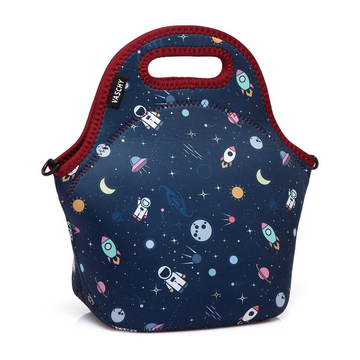
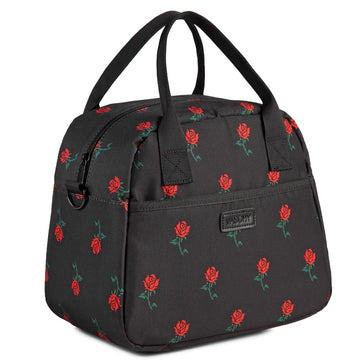
Choosing a School Lunch Bag: Space for Food, Ice Packs and Easy Access
Choose a lunch carrier around the complete kit: food containers, cold sources and the steps your child uses to open and repack lunch. Compare two Vaschy layouts.
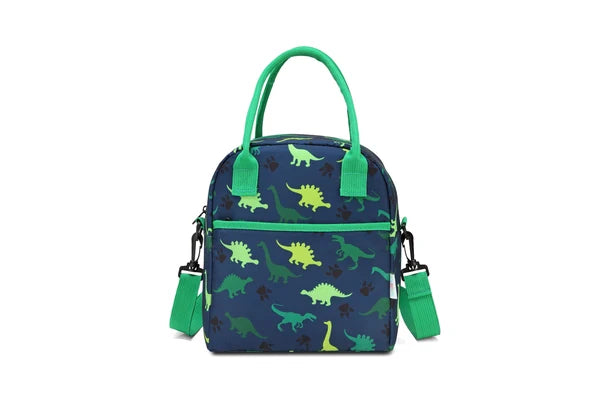
The lunch box fits inside the bag. Then you add the ice packs, snack container and spoon, and the zip becomes a struggle. That is the arrangement to check before buying the carrier.
To choose a school lunch bag, start with the containers and cooling supplies your child actually needs. Check that the complete kit fits through the opening, that the bag closes without forcing it, and that your child can take lunch out and put the pieces back. An insulated label or a capacity number cannot answer all of those questions.
This guide focuses on the separate lunch carrier. Once that part works, use the school backpack packing checklist to see how it travels with folders and school supplies. The checks below are suggested household checks, not results from a Vaschy fit or temperature test.
Find out where lunch waits
Before comparing bags, ask the school how lunch is stored and eaten. A refrigerator in a staff room does not necessarily mean children can use it. A cubby, classroom shelf and outdoor lunch area also create different practical questions.
Get answers to these points:
- When does lunch leave home, and when is it eaten?
- Is a refrigerator available for your child's food?
- Are the snack and lunch kept together or taken out at different times?
- Does the lunch bag travel inside the backpack or get carried separately?
- What food-allergy rules and container restrictions does the school have?
Follow your own school's rules. Health Canada's safe school lunch guidance stresses following school allergen policies, including when your own child does not have an allergy. A bag's pattern or pocket arrangement cannot settle those requirements.
Write down the ordinary routine rather than planning only for the shortest school day. Include an after-school activity if the same bag needs to carry another snack, but check storage needs for that food separately.
Build the lunch kit before choosing the carrier
Set the usual containers on the counter with their lids closed. Include the food box, separate snack container, cutlery, napkin and any cooling supplies. If a bottle will go inside the lunch bag, include that too. If it has its own place elsewhere, leave it out of this check.
Think about shapes as well as volume. A wide, shallow container and a tall round container take different paths through a zip opening. A lid's clips can project beyond the box, and a spoon may need its own sleeve or container. Measure the entire closed object, including the parts that stick out.
You do not need to invent a week's worth of elaborate lunches. Choose the container combination that represents a normal day, then check the largest arrangement you expect to use regularly. For example, a hypothetical lunch kit might use a broad main box on most days and a separate tall container occasionally. Those are two layouts to check, not a reason to assume the larger one will work.
Keep a short list of what must travel together. For each extra pocket, name the item you would put there.
Leave space for the cold sources
If lunch contains perishable cold food, cooling supplies belong in the shopping load from the beginning. Do not confirm fit with the food box alone and add the ice packs as an afterthought.
FoodSafety.gov's school meal-prep guidance recommends an insulated lunch bag and two cold sources, such as freezer packs or frozen water bottles, when packing perishables. Its cold-food target is 40°F (4°C) or below. This is general U.S. guidance, not a tested cooling claim for a particular lunch bag.
Clemson Extension's bag-lunch guidance describes placing one cold source below the perishable items and another above them. Include the bulk of that arrangement when checking a carrier. Canada's guidance also recommends insulated lunch bags and an ice pack for cold food; the two-source recommendation above is attributed to the U.S. sources.
Use the actual packs you plan to carry, in the shape they have when frozen. Check whether the container still sits in the orientation its manufacturer permits. Do not solve a space problem by removing a necessary cold source, forcing a lid or storing a container in an unsupported position.
An insulated bag is part of a food-storage plan; its appearance does not prove that a meal will stay at a safe temperature. Follow current food-safety guidance and the directions for the food and equipment. If the school provides refrigeration, confirm how and when it can be used. Never treat an advertised number of cooling hours as proof of your own meal's temperature.

Check the opening, then the space inside
A product's outside dimensions are not the same as its usable interior or zipper opening. Padding, seams and the shape of the opening can affect the route a container takes. A capacity figure in liters cannot prove that a particular box fits.
If you already have the bag, try the full kit with closed, empty containers and the cooling supplies. If you are shopping online, compare your measurements with clearly identified interior measurements or ask for them. Do not silently subtract an assumed amount from an exterior specification.
Use these checks:
- Open the bag normally. Can the largest container pass through without bending the bag or pressing its clips?
- Place it in its permitted travel position. Is there room for the cold sources and other essentials?
- Close the zip gently. Does it move without holding the sides together or pressing down on the lid?
- Open it again. Can the main container come out without unloading every small item?
- Put the pieces back. Does the empty return kit close just as easily?
This is a practical selection check, not a leak test or temperature test. Follow the container maker's storage directions. A zippered lunch bag should not be treated as a substitute for a properly closed food container.
If you need a precise fit answer from Vaschy, use Contact Us with the lunch-bag model, the closed container's measurements and the cold sources you intend to carry. Ask about the usable opening and inside space, rather than whether the bag is simply “large.”
Let your child rehearse the lunch sequence
An adult can make a packed bag look organized while quietly doing all the difficult steps. Give your child a chance to try the arrangement before it needs to work at school.
Use empty containers for a rehearsal. Ask your child to open the carrier, lift out the food box, open its lid, find the utensils and return the pieces. Watch where help is needed. A bag-opening problem and a container-latch problem call for different changes.
Set the bag on a table for the rehearsal. If the box needs to come out before its lid opens, practice that step explicitly. Do not count a lid that opens for you as a successful check for them.
Health Canada's school eating guide identifies difficulty opening packaging and limited eating time among reasons to investigate when lunch comes home uneaten. Ask which step was difficult before replacing the whole setup.
If the lid is the difficult part, try a different container. If utensils are hard to find, give them a simpler location. Ask the school what help is available when a step still needs an adult. The aim is to discover a practical obstacle. This rehearsal does not promise independence, quicker eating or a change in appetite.
Compare two Vaschy layouts with the same kit
The following current Vaschy listings provide different details to consider. Use those details to make a shortlist, then confirm the full kit and opening. Neither listing establishes compatibility with every bento box or a tested safe-cooling period for your meal.
If the table is wider than your screen, scroll across to compare the layouts.
| Model | What its listing identifies | Useful question before buying |
|---|---|---|
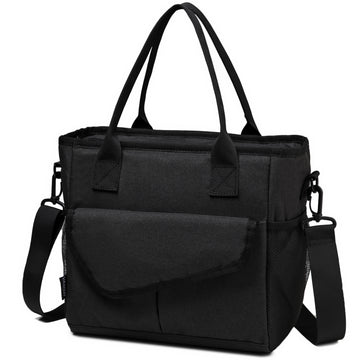
| Everyday Essential Lunch Box Bag | An insulated tote shape with a zipped outer pocket | Will my closed food container and cooling supplies pass through the opening and fit together? |
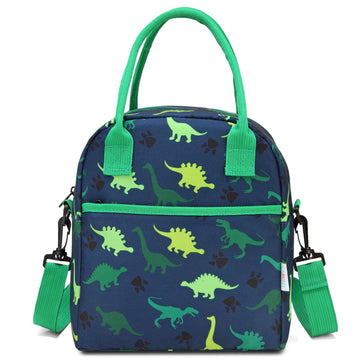
| School Daycare Lunch Box Bag | Zipped main compartment, front pocket, insulated wipe-clean interior and a name/address label on the back | Can my child use the main zip and return the containers, and will the front pocket suit the small items we carry? |
The Vaschy Everyday Essential Lunch Box Bag is worth comparing if you want a tote layout with a separate outer zip pocket. Decide what that pocket would hold in your routine, such as utensils in their own cover, instead of counting it as room for another food box.

View Everyday Essential colors and product details before choosing your lunch carrier. Keep your container measurements and cooling-supply list beside the product page.
The Vaschy School Daycare Lunch Box Bag lists a front pocket and a back identification label alongside its main compartment. Those may be useful parts of an organized school routine. Check that your small essentials fit the pocket; a photograph does not establish its usable dimensions.
Its listed wipe-clean interior is also worth considering, but that phrase does not give permission for machine washing, soaking or a particular cleaner. Read the care guidance supplied with the bag before choosing a cleaning method.

Explore the School Daycare Lunch Box Bag and check the available product details against your own kit. This comparison does not include food containers or ice packs as an advertised bundle.
Decide how it travels and comes home
If the lunch carrier goes inside a backpack, put the closed, complete lunch kit in before checking the school bag. Keep the detailed whole-backpack decision in the linked packing checklist. Here, check whether the lunch carrier can be lifted out in the way the school expects.
If it is carried separately, let your child try the actual handle or carrying method offered by the model. Do not assume a removable shoulder strap, backpack clip or bottle pocket is included because another lunch bag has one. Verify those features for the product you choose.
Think about the return trip too. A container lid, cutlery cover or small snack pot needs somewhere to go after use. Practice returning all the empty pieces rather than only packing a neat morning arrangement.
At home, take the lunch kit out promptly. Use the food's storage history to decide what can be kept, and follow the bag and container care instructions. Clemson advises discarding perishable lunch leftovers that have not been kept refrigerated; refrigerated leftovers are a different case. A closed lunch bag is not evidence that leftover food is safe.
If a bag or container was cleaned, let it dry fully before storing or repacking, following its own directions. Keep tomorrow's empty kit together so that finding the right lid does not become another morning task.
Questions that help you choose
Does an insulated lunch bag replace ice packs?
Do not assume it does. The U.S. guidance linked above recommends two cold sources with perishable lunches in an insulated carrier. Follow applicable food-storage advice; insulation alone does not establish your meal's temperature.
Can I choose a lunch bag from the liters number?
Use it as one specification, not a compatibility answer. The closed container's shape, the usable opening and the complete kit matter. Ask for interior or opening measurements if they are needed to make the decision.
Should I buy a bigger bag for next year?
Compare the lunch kit you expect to use, rather than a universal size by age. If next year's containers will change, check both arrangements. Extra advertised capacity is only useful if the opening, carry method and daily routine also work.
What if the main box fits but the zip is tight?
Recheck the complete arrangement. A different container shape or carrier may work better. Do not remove needed cooling supplies or force the closure just to make a bag pass your check.
Choose the bag around the lunch
Start with the real food container, allow space for the cooling supplies and rehearse access with your child. Then compare the product layout with those needs. Keep the shopping decision tied to the kit you carry, rather than an age label or an advertised cooling time.
Ready to make a shortlist? Compare the two Vaschy models above or browse the Vaschy lunch-bag collection. Choose from the current product options after checking the opening, complete kit and care details.
Photos: official Vaschy product galleries. They illustrate the bags, not a verified container-fit or food-temperature test.


