How to Choose a Tote Bag for a Jigsaw Puzzle Swap
Measure the box corners, bring the puzzles your organizer accepts and use a bag that can handle the shape you may bring home.
Choose a tote for a puzzle swap by testing the box corners at the opening, then leaving room for an unfamiliar shape on the way home. A structured canvas tote works for a small, measured stack. A quilted tote is another option if you also carry a layer and want to arrange it around the boxes. If the box you want is too long to go through the opening cleanly, figure out how you'll carry it on its own before you trade.
Read the swap instructions with your puzzles in front of you
Start by deciding which puzzles you’re willing to exchange. Check the organizer’s current directions for condition, accepted piece counts, registration and any advance drop-off. The Bits and Pieces puzzle swap guide explains the choices organizers make about how trades work. Individual programs, such as the Russell Public Library swap and the Round Rock Public Library swap, post specific instructions for participants. Confirm the current event before you count on a particular rule.
Check the box and its contents as well as you can. Follow the organizer’s instructions about completeness. If you’re unsure about a puzzle’s condition, ask whether it’s accepted before you pack it. Make any label the organizer wants readable without opening the box. A loose lid needs a way to stay closed while you walk. If the event allows a band or removable sleeve, try it around the box at home. Choose something that leaves the cover easy to inspect at the table.
Give yourself a return allowance before you leave
Imagine bringing two small boxes and finding one panoramic puzzle you’re excited about. It might be easier to carry by hand than to force one corner into the tote. Decide the largest box you'd carry through your bus stop or parking lot. Use that as your limit when you see something unexpected. A piece count can tell you about the puzzle itself. Box dimensions and weight are what matter for the bag.
Try an ordinary cardboard box as a stand-in for the widest item you’re willing to take home. Measure it across the corners you’ll pass through the opening, then note how high it sits next to the other boxes. Think about whether you will carry it flat, on its side, or by hand. A photo or note with the width and height can help at the event if a box looks larger than anything you brought.
Run the stack test with the bag open and closed
- Set the boxes on a clean surface, with the box you’ll hand over first where you can lift it by both edges.
- Slide the largest box through the opening without forcing the corner. Watch the handles, seams and any closure along the way.
- Put in a second box and the things that also travel with you. Keep your water bottle apart and secure, and check how the boxes sit when the handles pull together.
- Remove a box as you would at a crowded table, then put in the stand-in for a possible return box. Walk, turn and set the bag down without letting the lid catch.
If a corner always goes in first and comes out last, try rotating the bag opening toward you. If you still have to bend the box or press on the lid, change the format or carry that one item separately. If you’re taking transit, consider what that second carry does to your ability to reach a fare card or hold a rail.
Plan the biggest return box on the shortest route
Imagine you’ll trade two small rectangular puzzles for a single square one. Cut a paper rectangle to match the approximate footprint you’d accept and set it across the opening. A paper outline is a useful first screen, but it bends where a real corner won't. Try an actual rigid box of similar dimensions and thickness before deciding that the tote works. Watch for handles and trim that narrow the opening. A tape measure across the widest part of a tote only tells you what might be possible once the box is inside.
Next, try the same layout with a single small box, because you may leave with less than you planned. Walk to the door with a folded layer beside the box and then remove the layer. If the box tips over or the lid rubs on the closure, reposition it. A small, removable divider can help keep it in the place you tested. Put it away if you end up carrying a larger box that uses the whole available space.
Choose a place for the items you’ll need while holding a box. If the event gives you a ticket or token, keep it somewhere you can reach while the other hand steadies the lid. After an exchange, put the ticket away or return it as instructed before you start repacking. On a crowded table, slide one box out and put it down before lifting the bag around to the other side. That keeps the handle clear of the next person's stack.
There’s a practical way to decide when an extra tote belongs in your plan. Try walking from your front door to wherever you’d actually get on the bus or into your car while holding a spare empty carrier. If you could manage a separate box on that stretch, keep the spare folded inside the first bag. If the trip depends on a free hand, leave the spare at home and use the return box limit you tested. Give a child an individual box or another lightweight item only if they can carry it on the actual route.
Once you have the setup you like, use the box test again with your coat and any extra item you plan to bring to the library. A coat carried inside may take away exactly the corner space you left open for a replacement box.
Compare a structured tote and a quilted tote
For a short stack and quick access to the first box
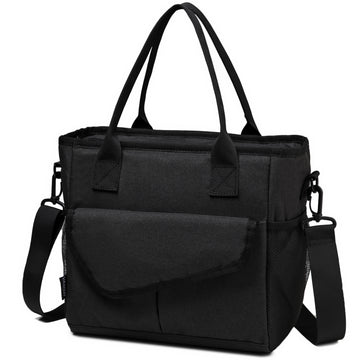
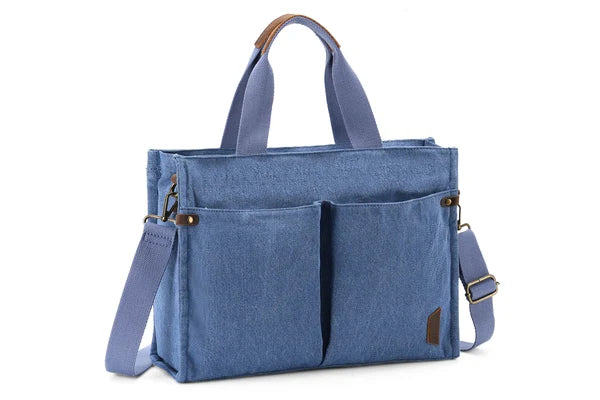
The VASCHY Canvas Tote Bag for Women is listed at 16.2 L with a structured shape, carry handles and a detachable shoulder strap. Try it with a small stack you can lift out from the top. Start with the box that has the stiffest corners. If it clears the opening and the rest of the stack stays put as it comes out, the structured tote gives your exchange boxes a consistent place to sit.
Wear it with the strap if that suits the trip to the library and test the handles for the handoff. Carry it across a room and set it on a stable surface. If the box on top slides toward the opening, separate it or change how the boxes sit. Leave the organizer enough access to see the label without handling the whole stack.
Shop the Vaschy Canvas Tote Bag in Denim Blue if your swap load is a few familiar boxes and you value a structured carry.

For a box plus a layer, a pouch and other small extras
The VASCHY Quilted Puffy Laptop Totes listing describes a quilted design and gives an 18 L capacity. Try this format if you plan to carry a box with a folded layer and a separate pouch. A soft tote can change shape when you pick it up, so test it with a rigid box inside. Notice whether the handle position makes it easy to hold the bag still while you remove the box.
Put any separate divider you intend to use into the bag before testing. A little room around a box can make insertion easier, while excess space can let a thin lid slide or a narrow box lean. Try the return trip with only one box and the other items still packed. Give that box a consistent position you can maintain without gripping the side of the tote the whole way.
Shop the Vaschy Quilted Puffy Laptop Tote in Light Blue if your puzzle travels with a soft layer and a few extras.


Pack the exchange and the trip home in different orders
At drop-off, pull out the label or whatever the event uses to track an exchange. When you choose a puzzle, check the lid and its dimensions before placing it in the bag. Return the pouch and other items to their places after the new box goes in. If you carry it separately, find a spot for the tote where it won't hit the new box as you leave. Once home, take out the puzzle and put the bag back into normal use.
Questions for a first puzzle swap
Do more pieces always need a bigger tote?
Use the actual box as the guide. Two puzzles with the same piece count can have different box footprints, shapes and thickness. Measure the stiffest edge and test it through the real opening.
Can a backpack work?
Yes, if the boxes go through the opening without bending and stay stable when worn. A tote can make table access easier, while a backpack gives you more free hand space for the trip. Test the bag you own first.
What if a puzzle doesn’t have its original box?
Check the event’s instructions before bringing it. Ask about acceptable packaging and condition. If the organizer accepts the alternate container, use its outside shape in the same fit test.
Choose the bag around the box you’re likely to bring home
For a modest stack and a structured opening, shop the Vaschy Canvas Tote Bag. If you’ll add a layer and other small items, shop the Vaschy Quilted Puffy Laptop Tote and do the full return-trip rehearsal with the largest box you’re willing to carry.


