What to Pack in a Bag for Your First Adult English Class
Choose a bag that works at a shared classroom table and keeps the next assignment easy to find.
Pack the workbook or device your English program asks for, and leave a place for the handout you’ll need at home. If you bring a notebook and one folder, a structured tote can make the papers easy to reach at a shared table. If you come straight from work or carry a layer and lunch on transit, compare a backpack. You can make the decision once you know what the class supplies and how you’ll use it.
Check the welcome message before buying a textbook or loading a device. Registration, a first lesson and the weeks that follow may each call for different things. Most of the bag can stay the same while one pocket or folder changes jobs.
Separate enrollment from the first lesson
Interactive College of Technology’s first-class guide discusses notebooks and writing materials for its English learners. The Teachers College Community Language Program FAQ is another example of program-specific instructions. In Canada, the BC Newcomer guide to adult language classes explains an enrollment path for its intended readers. Use your own program’s current instructions for what you need to show or carry on a particular day.
Ask what happens at the first meeting. It might be a regular class, an intake or a meeting where the teacher explains how to get a workbook. If you need to bring a record for check-in, give it a specific place and take it out of the daily bag once you’re finished with that step. Keep personal records in your control. Bring the particular documents the program asks for, in the form it accepts.
For a regular class, start with one writing tool you can find, the notebook or printed materials you expect to use and a place for a new sheet. Ask whether the class uses a phone, computer or paper and whether the instructor wants you to bring anything else. A device adds its own shape and sometimes a charger or case. Give those items a place only after you know they belong in your class routine.
Rehearse the first reach at a shared table
Lay out the class items on half of a table. Put the bag beside a chair and pull out the notebook, the pen and the handout folder in the order you expect to use them. Try to leave the other half of the table free. If the bag needs to sit on the table before you can reach the notebook, change the packing order and try it again from beside your chair.
Pick the first page you’ll want when class starts. It could be the previous assignment, a list of questions or the page where you left off last week. Place that sheet in a pocket of the folder you can recognize. If you use one notebook for several things, mark the current page. A spot you can identify without looking through every sheet is useful when someone is already talking at the front of the room.
Put small items in one place away from the loose paper. A pen that rolls to the bottom of a tote can be hard to find when the workbook is already open. You may need only one pouch, or a pocket you’ve already found easy to reach. If you bring earbuds for an activity the instructor has described, keep them with the device you’ll use, with the cable or case contained.
Use the same test for the trip from work or home
Suppose you finish work and go straight to a class. Your bag may already have lunch, a jacket and a personal pouch. Pack those pieces first and then try sliding the actual workbook into the available opening. Pull it out with the bag beside a chair. If you need to take out lunch before you can reach the book, try a different position or a bag whose layout gives the school materials their own route.
On a shorter trip from home, you might carry one notebook, a couple of sheets and your keys. Your current tote may have enough space, and the thing you’re missing is a folder that holds loose papers. Bring one and see how it comes out with the bag partly full. The choice can also change by season. Try the handles and the shoulder strap over the coat you usually wear for the trip.
For a digital lesson, use the device and case you really carry in the fit check. Add the charger only if you plan to bring it and keep it in a place that doesn’t press into the device or bend a paper. Check that the bag closes normally with the case in place. A listing’s device or volume number can’t tell you how your own case moves past the zipper.
Keep the paper and digital versions of the class manageable
If the teacher shares digital material and also hands out paper, decide which kind you need first when you sit down. You might use the notebook for notes and leave the device in the bag until a particular exercise. Put the notebook where you can get it without moving the case. If you use the device first, check that you can take it out with the folder still packed and place it where the instructor wants it. Keep the loose cable together so it doesn’t tug on paper when you put the device away.
Check how a new packet will change the load. Try putting a few blank sheets where a set of handouts might go, close the bag and pull out yesterday’s assignment. If the folder is hard to open beside the chair, slide it out before flipping through it. When the teacher gives you one more sheet at the door, you’ll know where it fits without bending it across the rest of the bag.
If you share a ride, think about the other things you carry to class. You might want your transit card or keys in the usual pocket and the school materials in a place you open only after sitting down. That arrangement can stay in place even when you switch from paper to a device. At home, put the finished task back into the spot you’ll check at class. Keep one place for work to do and one place for work to bring back. A simple folder inside the bag can do both jobs.
If the course uses a weekly workbook, clip a bookmark to the lesson you expect to open. Test the reach with the other things you carry home. Ask the instructor whether the next lesson needs the same book before taking a second one.
Compare a structured tote and a backpack
A canvas tote for paper at a shared table
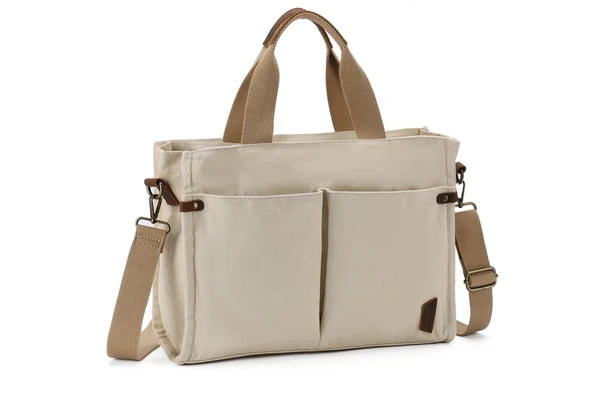
Vaschy describes the Canvas Tote Bag for Women as a structured tote with top handles and a detachable shoulder strap. Try the design when you want to set the bag next to a chair and take a folder straight out. Start with the widest thing you actually carry, which might be a workbook with a wire binding. Shop the Apricot Canvas Tote if that piece clears the opening with your regular load and you like being able to carry it by its handles or strap.

Pack a finished worksheet beside a blank sheet, then try putting one of them away while the other stays out. If the folder sticks against a pouch, move the pouch to the side you reach from last. The tote makes sense when it helps you get to your paper from beside the table, even when the rest of the load is still in it.
An UltraLight Backpack for a longer commute
The Vaschy UltraLight Backpack listing describes a main zip compartment with a file divider and a front zip pocket. Try it when both hands are useful on the trip and you want a place for the writing kit apart from the main load. Put your actual folder or workbook against the divider and check what happens when you add lunch or a layer. Shop the FireBrick UltraLight Backpack if the folder still comes out easily and the front pocket works for the items you need first.

Take the backpack off and set it where a chair would be. Open it, find the pen, pull out the book and close it again. The backpack might fit the commute nicely and still take an extra step at the desk. Decide whether the way you’ll carry it most days is worth that step. If you mostly come from home and set the bag down right away, try the tote first.
Make the next assignment easy to find
When the teacher gives you a paper or a task, put it where you’ll see it when you sit down at home. If you use a folder, reserve one easy-to-find place for the sheet that needs action. Put completed work somewhere else in the same folder if that helps you avoid opening the wrong page. For a digital task, save it in the way the program uses and put a short reminder where you’ll find it.

At the end of the first week, take out the papers and supplies you don’t need for the next class. Try the remaining kit at the table once more. A bag that fits at orientation may feel very different after a workbook or handout packet joins the daily load. The routine you can repeat makes a better shopping guide than a list of all the things you might ever bring.
If you prefer direct access beside the chair, shop the Apricot Canvas Tote after testing the real folder. If you bring more from work or ride transit with both hands free, shop the FireBrick UltraLight Backpack if its divider and front pocket work with your class kit. Give the next assignment one place you’ll remember.


